5x5 at home: the complete equipment guide
Build a complete home gym for 5x5 training. Essential equipment, budget options, space requirements, and setup tips for serious strength training.
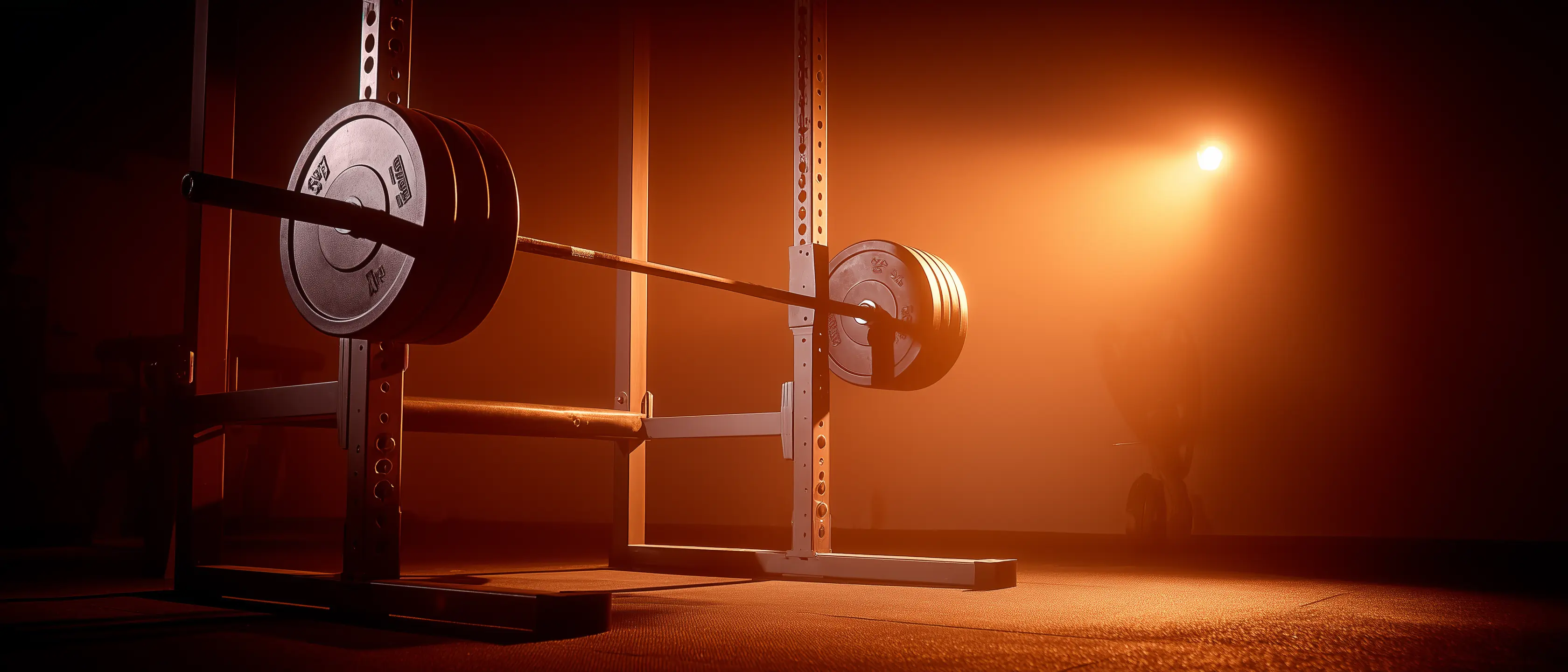
Commercial gyms have their advantages: equipment variety, community, air conditioning. But nothing beats the convenience of training at home.
No commute. No waiting for equipment. Train at 5 AM or midnight. The barbell is always available.
Here’s how to set up a home gym that handles everything 5x5 requires. Check the strength programs guide for which programs work best in a home setting.
Essential Equipment
The Barbell ($150-400)
This is your most important purchase. Don’t cheap out.
What to look for:
- Olympic barbell (7 feet long, 45 lbs, fits Olympic plates)
- 20kg (45 lbs) for standard men’s bar
- 15kg (35 lbs) for women’s bar (shorter, thinner grip)
- 190,000+ PSI tensile strength for durability
- Good knurling (texture) for grip
Budget option: CAP, Rogue Echo, or similar ($150-200)
Better option: Rogue Ohio Bar, Rep Fitness, Bells of Steel ($250-400)
A quality barbell lasts forever. Cheap barbells bend, have poor knurling, and spin poorly. See our guide to barbell types to understand the differences between power bars, Olympic bars, and specialty bars.
Weight Plates ($300-600)
You need enough weight to progress for months.
Recommended starting set:
- 2 × 45 lb plates
- 2 × 25 lb plates
- 4 × 10 lb plates
- 2 × 5 lb plates
- 2 × 2.5 lb plates (or 1.25 lb microplates)
Total: 300 lbs, enough for most beginners to progress 6+ months on all lifts.
Types of plates:
Iron/Cast plates: Cheapest, loud when dropped, can damage floors.
Bumper plates: Rubber coating, can be dropped safely, more expensive, take up more space on the bar.
Calibrated plates: Precise weight, competition standard, most expensive.
For home 5x5, iron plates work fine unless you plan to drop deadlifts.
Squat Rack or Stands ($100-500)
Options:
Squat stands ($100-200): Two independent uprights. Work but less stable. Require safety arms purchased separately.
Half rack ($250-400): Connected uprights with built-in safeties. More stable than stands.
Full power cage ($400-800): Four posts, most safety options, takes more space. Read our best power rack for home gym guide for detailed comparisons.
For 5x5, a half rack is the sweet spot — good safety, reasonable cost, smaller footprint than a full cage.
Critical feature: Safety bars/arms that can catch failed lifts. Training alone without safeties is dangerous.
Bench ($100-300)
A flat bench handles 5x5 requirements. Adjustable (incline/decline) is nice for accessories but not necessary.
What to look for:
- 600+ lb weight capacity
- Stable, doesn’t wobble
- Appropriate height for your body (15-17 inches typical)
- Pad neither too wide nor too narrow
Cheap benches flex under heavy weight and have uncomfortable pads. Spend enough to get something solid.
Optional Equipment
Floor Protection ($50-200)
Rubber gym flooring or horse stall mats protect your floor and deaden sound.
Options:
- Horse stall mats (3/4 inch rubber, ~$40-50 per 4×6 mat)
- Interlocking gym tiles (easier to install, less durable)
- Rubber gym rolls (professional but expensive)
For a 8×10 area, 3-4 stall mats cover everything.
Microplates ($20-40)
1.25 lb plates allow 2.5 lb jumps instead of 5 lb. Essential for upper body progression.
Pull-up Bar ($20-100)
Doorframe mount or wall-mounted bar. Chin-ups complement 5x5 perfectly.
Dumbbell Set ($100-500)
Not required for 5x5, but useful for warmups and eventual accessories. An adjustable set saves space. If you’re weighing barbells against dumbbells, see our comparison of barbell vs dumbbell training for beginners.
Lifting Shoes
Proper footwear matters for stability during squats and presses. See our guide to the best shoes for lifting — flat, hard-soled shoes or dedicated lifting shoes beat running shoes on every lift.
Mirror (optional)
Useful for form checks during training.
Choosing the barbell
One standard 20 kg (or 15 kg) Olympic barbell handles every exercise in the program — squat it, bench it, press it, row it, pull it. What to look for:
- 190,000+ PSI tensile strength — the bar shouldn’t take a permanent bend from a loaded rack pull
- Moderate knurling — grippy without shredding your hands on high-rep squats
- Bushing sleeves (not bearings — those are for Olympic lifting) with smooth, consistent spin
- Black oxide or zinc finish — corrosion resistance that survives a garage
Spending tiers: $100–180 gets an entry bar (CAP, unbranded) that works but you’ll likely replace; $200–350 is the sweet spot — Rogue Echo, Rep Sabre, Bells of Steel Barenaked and similar hit all the specs above and last decades with basic care; above $350 you’re paying for competition specs 5x5 doesn’t need. Skip specialty bars until you have a specific reason for one.
Choosing the rack
The rack is your safety system when you train alone, so this is the wrong place to economize.
- Hole spacing is the most overlooked spec. Standard 5 cm spacing can leave your bench safeties either too high (blocking the bar path) or uselessly low. Westside spacing — 2.5 cm holes through the bench zone — lets you set safeties that catch a failed bench just below your chest arc. Worth the small premium every time.
- Weight capacity: 300 kg+ covers a lifetime of 5x5. Any 2×3-inch upright rack from a real brand clears this.
- Full cage vs stands: a four-post cage with pin safeties is the safest option for solo benching and squatting. Squat stands with spotter arms work if space is tight — but test that the arms are long enough to actually catch your bench press.
- Budget tiers: $200–400 (Titan, Rep PR-1000 class) is genuinely enough for 5x5 weights; $500–900 buys Westside spacing, better steel and accessories. Bolt it down or ballast it either way.
Space Requirements
Minimum footprint: 8 × 10 feet
This accommodates:
- Barbell length (7 feet) plus room to load plates
- Rack width (typically 4 feet)
- Space to step back from the rack for squats
- Clearance above for overhead press (8+ foot ceiling needed, 9+ foot ideal)
Garage gym: Single-car garage (10×20) leaves plenty of room.
Basement gym: Most basements have low ceilings. Check clearance for overhead press before setting up.
Apartment/spare room: Possible but consider noise, floor protection, and ceiling height.
Budget Setup (~$600)
- CAP or similar barbell: $150
- 300 lb plate set: $250 (watch for sales)
- Squat stands with safety arms: $150
- Flat bench: $100
- Total: ~$650
This handles everything for 5x5. Upgrade pieces as budget allows.
Mid-Range Setup (~$1,200)
- Quality barbell (Rep, Rogue Echo): $250
- 300 lb bumper plates: $500
- Half rack with safeties: $300
- Quality flat bench: $200
- Stall mats: $80
- Total: ~$1,330
Better durability, can drop deadlifts safely, more stable rack.
Premium Setup (~$2,500+)
- Rogue Ohio Bar or similar: $400
- Calibrated plates or quality bumpers: $800
- Full power cage: $600
- Adjustable bench: $350
- Platform and mats: $200
- Microplates, bands, accessories: $150
- Total: ~$2,500
Commercial gym quality. Lasts decades with minimal maintenance. Any program in the programs guide can be run with this setup.
Where to Buy
New equipment:
- Rogue Fitness (premium, expensive)
- Rep Fitness (good value)
- Titan Fitness (budget-friendly)
- Bells of Steel (Canada-based)
- Fringe Sport (mid-range)
Used equipment:
- Facebook Marketplace
- Craigslist
- Local classifieds
- Gym liquidation sales
Used equipment often sells at 50% of retail. Olympic plates don’t wear out — 20-year-old iron plates work identically to new ones.
Setup Tips
Ceiling Height for Press
Standard press requires 7+ feet of standing room. If your ceiling is 8 feet, the barbell at the top of the press leaves minimal clearance.
Options for low ceilings:
- Seated press instead
- Kneel while pressing
- Press outside or in doorways
Floor Protection for Deadlifts
Even without dropping, deadlifts can damage floors over time. Rubber mats plus plywood underneath create a solid platform.
Noise Considerations
Neighbors and family members have limits. Rubber mats help significantly. Bumper plates are quieter than iron. Control the descent rather than dropping.
Climate Control
Garages get hot in summer, cold in winter. Consider:
- Space heater for winter
- Fan for summer
- Chalk for sweaty hands
Start Training
Once equipment arrives:
- Set up safety bars at appropriate height (just below your squat depth)
- Test the setup with empty bar
- Begin the program
The 5x5 guide explains everything. Learn proper warmup and squat technique.
Track every home session with Lift5x5. Your garage PR counts the same as a gym PR.
Track your 5x5 progress automatically
Built-in plate calculator, rest timer, and auto-progression. Free for iOS & Android.
Frequently asked questions
How much does a home gym for 5x5 cost?
A basic setup costs $500-1,000: barbell ($150-300), 300 lbs plates ($300-500), squat stands ($100-200). Quality equipment lasts decades, making the per-workout cost minimal.
Can I do 5x5 without a rack?
Technically yes, but it limits squat and bench press safety. At minimum, get squat stands with safety arms or spotter arms. Proper safety equipment is not optional for heavy training alone.
How much space do I need for a home gym?
An 8×10 foot area works for most setups. You need room for the barbell (7 feet long), space to step back for squats, and clearance for overhead press. A single-car garage or basement corner typically suffices.
Writes the Lift5x5 training blog. Over a decade under the bar running 5x5-style programs — practical strength advice with no BS, just barbells.
More about Erik →