How to squat: the complete beginner guide
Learn proper squat form from scratch. Step-by-step instructions, common mistakes, and how to progress safely as a beginner.
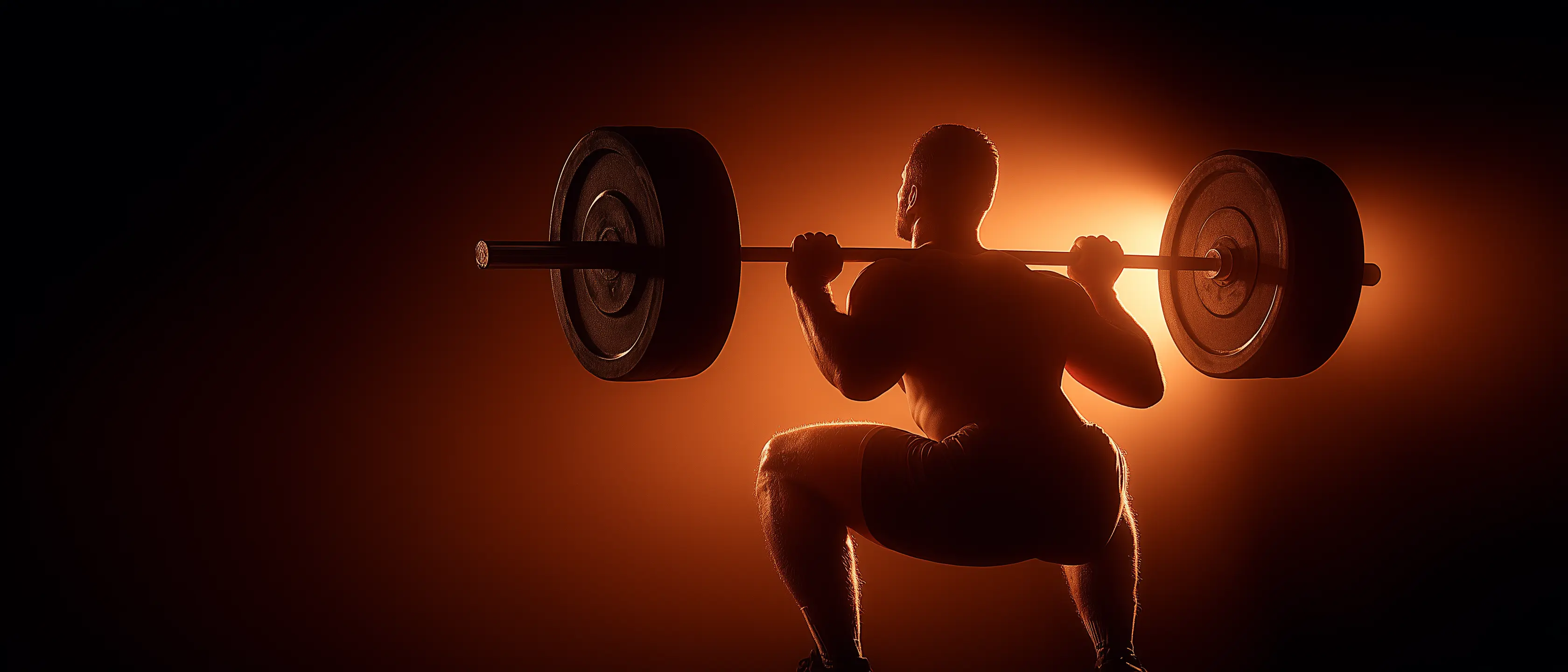
The squat builds more muscle and strength than any other exercise. Your quads, hamstrings, glutes, adductors, core, and spinal erectors all work together through a full range of motion.
You’ll squat every workout on 5x5 — three times per week. Get the form right and you’ll add weight consistently. Get it wrong and you’ll stall early or risk injury. Our exercise guide covers proper form for every lift in the program.
This guide covers everything from your first bodyweight squat to handling heavy weight.
Why Squats Matter
Squats train the pattern you use to sit down, stand up, pick things off the floor, and climb stairs. This isn’t just gym strength — it’s movement quality that keeps you functional for life.
A 2010 study in the British Journal of Sports Medicine found that leg strength was one of the strongest predictors of fall risk in older adults. People who could stand from a chair without using their arms had significantly lower mortality rates.
You’re building strength you’ll actually use. That’s the point.
The Basic Squat Pattern
Before loading a barbell, you need the movement pattern. Most people have been squatting wrong their entire lives — sitting back onto toilets and couches has trained terrible mechanics.
Bodyweight squat setup:
- Stand with feet shoulder-width apart
- Toes pointing out slightly (15-30 degrees)
- Arms straight out in front for balance
Execution:
- Break at your hips AND knees simultaneously
- Push your knees out over your toes
- Keep your chest up — look at a spot on the wall
- Descend until your hip crease passes below your knee
- Drive through your whole foot to stand up
Do 3 sets of 10 bodyweight squats daily for a week before adding weight. If you can’t hit depth without falling backward or your heels lifting, you need mobility work first.
Barbell Squat Setup
Once the pattern feels natural, add the bar.
Bar Position
Two options: high bar and low bar.
High bar: Bar rests on your traps, right below the base of your neck. This is how most people learn to squat. It’s more quad-dominant and allows a more upright torso.
Low bar: Bar rests lower, across your rear deltoids. This shortens the moment arm from bar to hips, letting you lift more weight. It’s more hip-dominant and requires more forward lean.
Start with high bar. It’s more forgiving for beginners and teaches proper bracing before you complicate things with low bar mechanics.
Hand Position
Grip the bar as narrow as your shoulder mobility allows. Narrower grip = tighter upper back = more stable shelf for the bar.
If narrow grip hurts your wrists or elbows, widen until it’s comfortable. You can work on shoulder mobility over time.
Unracking
- Step under the bar and set it in position
- Squeeze your shoulder blades together
- Stand up by straightening your legs — don’t good morning the bar out
- Take 2-3 small steps back (no more)
- Set your stance: shoulder width, toes out
The walk-out matters. Three steps maximum. Excessive shuffling wastes energy and doesn’t improve your position.
The Descent
Initiating the Squat
Break at the hips and knees together. Not hips first (that’s a good morning), not knees first (that shifts weight to your toes).
Some people cue “sit back” — this works if you tend to shoot your knees forward early. But too much sitting back leads to forward lean and the bar drifting over your toes.
Knee Tracking
Your knees should track over your toes. If your feet point out at 30 degrees, your knees should point out at 30 degrees.
Knees caving inward (valgus) is the most common squat mistake. It reduces power and stresses your knee ligaments. If it happens, reduce the weight and focus on pushing your knees out.
Depth
Hip crease below the top of your knee. This is “below parallel” and it’s non-negotiable.
A 2012 study in the Journal of Strength and Conditioning Research compared partial squats (above parallel) to full squats (below parallel). Full squats produced significantly greater glute activation. The people doing half-squats weren’t training their glutes effectively.
Beyond muscle activation, cutting depth short actually increases knee stress. At the bottom of a full squat, your hamstrings wrap around your knee joint and protect it. Stop high and you lose that protection.
If you can’t hit depth, it’s usually an ankle or hip mobility issue — not a reason to squat high.
The Ascent
Drive Out of the Hole
“The hole” is the bottom of the squat. Drive up by:
- Pushing through your whole foot (not just heels, not just toes)
- Squeezing your glutes
- Keeping your chest up
- Maintaining knee position (don’t let them cave)
The first few inches are the hardest. Once you’re moving, momentum helps. If you fail a squat, it happens in the hole.
Common Ascent Mistakes
“Good morning” squat: Your hips rise faster than your shoulders, turning the squat into a hip hinge. This shifts stress to your lower back. Fix it by cueing “chest up” and reducing weight.
Knee cave: Knees collapse inward as you drive up. Usually a weakness in the hip abductors. Reduce weight and consciously push knees out. Glute activation exercises before squatting can help.
Forward lean: Excessive torso lean puts the bar forward of mid-foot. You’ll feel it in your lower back. Usually caused by weak quads or poor ankle mobility.
Breathing and Bracing
This is the most important thing you’ll learn about squatting heavy.
The Valsalva Maneuver
- Before each rep, take a deep breath into your belly (not your chest)
- Brace your core like you’re about to get punched
- Hold that brace through the entire rep
- Breathe out at the top, reset, repeat
This creates intra-abdominal pressure that stabilizes your spine. Without proper bracing, heavy squats put your lower back at risk.
Some trainers discourage breath-holding due to blood pressure concerns. The research doesn’t support this for healthy individuals. The Valsalva maneuver is standard practice in competitive powerlifting, Olympic weightlifting, and strongman.
If you have cardiovascular issues, talk to your doctor. For everyone else, learn to brace properly.
Common Beginner Mistakes
1. Not Going Deep Enough
Already covered, but worth repeating: hip crease below knee. Film yourself from the side to check.
2. Heels Rising
Your weight shifts forward and your heels lift off the ground. Causes:
- Ankle mobility restrictions
- Improper weight distribution
- Leaning too far forward
Fix: Work on ankle mobility, possibly use squat shoes with a raised heel, or put small plates under your heels temporarily.
3. Knee Cave
Knees collapse inward at the bottom or during the ascent. Causes:
- Weak hip abductors
- Too much weight
- Poor proprioception
Fix: Reduce weight, focus on pushing knees out, add banded squats to warm-up.
4. Lower Back Rounding (Butt Wink)
At the bottom of the squat, your pelvis tucks under and your lower back rounds. Small amounts are fine; excessive rounding is a problem.
Causes:
- Squatting too deep for your current mobility
- Weak core
- Tight hamstrings
Fix: Work on hip flexor and hamstring mobility, strengthen core, and find your natural depth limit.
5. Bar Position Shifting
The bar moves on your back during the lift. This destabilizes everything.
Fix: Squeeze your upper back tighter, grip the bar more narrowly if possible.
Warm-Up Protocol
Never jump straight to your working weight.
Example for 60kg work sets:
- Empty bar (20kg) × 10 reps
- 40kg × 5 reps
- 50kg × 3 reps
- 60kg × 5×5 (work sets)
The warm-up accomplishes three things:
- Literally warms up your muscles and joints
- Greases the movement pattern
- Lets you assess how you feel that day
If your warm-up sets feel heavy, it might not be a good day for PRs.
Progression
On 5x5, add 2.5kg every successful squat workout. Complete all 5 sets of 5 reps with good form, add weight next time.
This works until it doesn’t. When you fail three sessions in a row at the same weight, deload 10% and work back up. For more on handling stalls, read about what to do when you fail reps.
Expect squat progress to be the most consistent of all your lifts. You squat three times per week, giving you maximum practice.
Mobility Work
If you can’t hit depth or maintain position, these stretches help:
Ankle dorsiflexion:
- Kneel in front of a wall, toes 4 inches away
- Drive your knee toward the wall without lifting your heel
- Hold 30 seconds each side
Hip flexor stretch:
- Half-kneeling position
- Push your hips forward, squeeze rear glute
- Hold 30 seconds each side
Goblet squat prying:
- Hold a light kettlebell or dumbbell at your chest
- Squat down and sit in the bottom
- Use your elbows to push your knees out
- Hold 60 seconds
Do these daily if mobility is limiting your squat. Progress is slow but it accumulates.
When to Get Coaching
Consider getting in-person coaching if:
- You’ve been stuck at the same weight for 6+ weeks despite deloads
- You experience pain (not discomfort, actual pain) during squats
- Your form looks significantly different at heavy vs. light weights
- You can’t hit depth despite consistent mobility work
A good coach can identify issues that are invisible to you. One session is often enough to fix major problems.
Start Today
The squat is the most important exercise in 5x5, and you’ll do it every session. Take time to get the basics right.
Film yourself from the side. Check depth. Watch for knee cave. Master the brace. Add weight slowly. Visit the exercise guide for technique breakdowns of all five barbell movements.
Six months from now, you’ll squat more than most people in your gym have ever attempted.
Ready to track your squats with automatic progression?
Track your 5x5 progress automatically
Built-in plate calculator, rest timer, and auto-progression. Free for iOS & Android.
Helping lifters get stronger with the simplest program that works. No BS, just barbells.