Barbell vs dumbbells: why barbells build more strength
Barbells let you load heavier, progress in smaller increments, and build maximal strength faster. Why 5x5 uses barbells and when dumbbells matter.
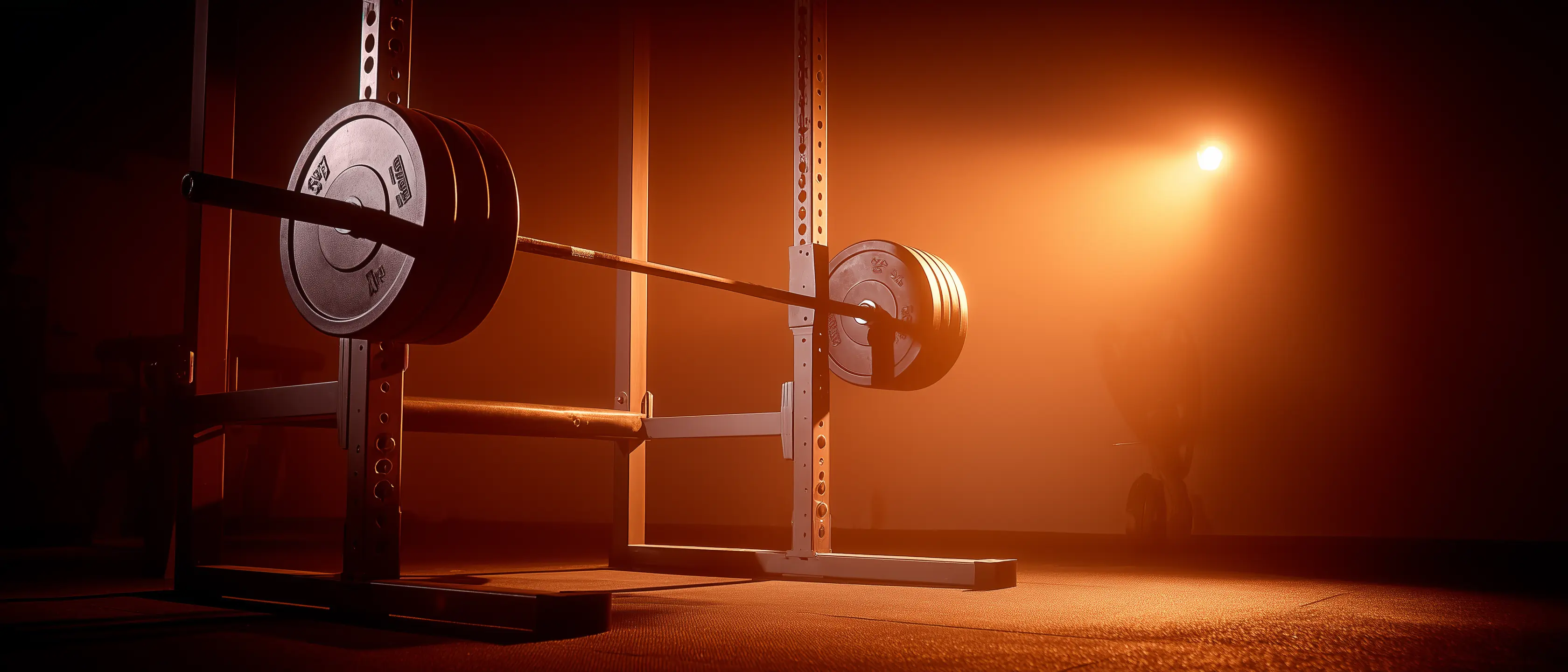
Walk into any gym and you’ll see two worlds. Over by the squat racks and platforms, people are loading barbells with plates. Across the floor by the mirrors, people are curling dumbbells. Both groups are building strength, but they’re not building it at the same rate.
5x5 is a barbell program. Not because dumbbells are bad, but because barbells are better at the one thing that matters most for beginners: consistent, measurable, long-term strength progression.
Here’s why, and where dumbbells still earn their place.
The case for barbells
Progressive loading in small increments
This is the biggest advantage, and it’s not close.
A standard barbell weighs 20kg. You add plates to each side. The smallest standard plates are 1.25kg, which means you can increase the total weight by 2.5kg. With microplates, you can go even smaller.
Dumbbells in most gyms jump in 2kg or 2.5kg increments per dumbbell. That sounds similar until you realize that when you press two dumbbells, you’re adding 4-5kg total per jump. Some gyms have even bigger gaps - 5lb (2.27kg) per dumbbell, or 10lb (4.5kg) total per increase.
On 5x5, you add 2.5kg to your bench press every session. In three workouts, that’s 7.5kg. With dumbbells, you’d have to jump 4-10kg in a single session. That’s the difference between a manageable increase and one that might cause you to fail.
Over twelve weeks, a barbell lifter has made about 15 incremental increases to their bench press. A dumbbell lifter has maybe made 4-5 bigger, harder jumps. The barbell lifter progressed further with less struggle, simply because the tool allowed smaller steps.
Heavier absolute loads
You will always be able to lift more weight with a barbell than with dumbbells for the same exercise.
A person who can barbell bench press 80kg probably can’t dumbbell bench press two 40kg dumbbells. The stabilization demands are different, and getting heavy dumbbells into position is a challenge in itself.
For squats and deadlifts, the difference is even more extreme. You might squat 100kg with a barbell, but holding two 50kg dumbbells on your shoulders isn’t practical or safe. And you’d need custom-made dumbbells to replicate a 180kg deadlift.
Why does heavier weight matter? Because strength adaptation is proportional to the load your body handles. Heavier loads create greater mechanical tension, which is the primary driver of strength gains. Your nervous system adapts to handle the load, your muscles grow to support it, and your connective tissue strengthens to protect you.
Barbells let you access loads that dumbbells physically can’t.
Bilateral stability
When you squat with a barbell on your back, the weight is evenly distributed across a fixed bar. Your body moves as a single unit. The movement pattern is relatively simple: go down, come up.
When you hold two dumbbells, each arm works independently. Each side has to stabilize its own weight. This sounds like a benefit (and sometimes it is), but for a beginner learning to squat or press, it adds complexity that gets in the way of learning the core movement pattern.
Beginners need to learn how to brace, how to maintain proper bar path, and how to generate force through a full range of motion. A barbell lets you focus on those fundamentals without also worrying about balancing two independent weights.
Once you’ve mastered the barbell movements, adding dumbbell variations for variety and unilateral work makes sense. But learn the basics with the simpler tool first.
Systemic stress and adaptation
Lifting 120kg off the floor in a deadlift creates a fundamentally different physiological response than lifting two 30kg dumbbells. Your entire body is under load: your legs, hips, back, core, grip, everything braces against that weight.
This systemic stress drives neural adaptation - your nervous system learns to recruit more muscle fibers and coordinate them more efficiently. The full-body demand of heavy compound barbell lifts creates a training stimulus that isolated dumbbell exercises cannot match.
You simply can’t replicate this level of systemic loading with dumbbells. The weights aren’t heavy enough and the positions aren’t stable enough.
This isn’t a knock on dumbbells. It’s an acknowledgment that for the specific goal of building maximal strength as efficiently as possible, barbells are the superior tool.
When dumbbells are better
Barbells win for primary strength work. But dumbbells have genuine advantages in several areas.
Addressing muscle imbalances
Your dominant side is probably stronger than your non-dominant side. With a barbell, your stronger side can compensate for the weaker one without you noticing. Over time, this can create or worsen imbalances.
Dumbbells force each side to work independently. If your left arm can only press 25kg while your right handles 30kg, you’ll know immediately. And you can train at the lower weight until both sides match.
This is why dumbbell accessories work well alongside barbell main lifts. The barbell builds overall strength; dumbbells keep things balanced.
Working around injuries
If you’ve got a shoulder issue on one side, a barbell bench press loads both shoulders equally. You can’t reduce the load on the injured side without reducing it overall.
Dumbbells let you train the healthy side at full capacity while going lighter or using a different movement on the injured side. This keeps you training productively during recovery.
Greater range of motion
On a barbell bench press, the bar hits your chest and stops. On a dumbbell bench press, you can bring the dumbbells lower than chest level, stretching the chest through a fuller range of motion.
For hypertrophy (muscle growth), this extended range of motion can be beneficial. It’s one reason dumbbell presses work well as an accessory exercise after your main barbell bench work.
Exercises without barbell equivalents
Lateral raises, lunges, Bulgarian split squats, dumbbell flyes - some exercises simply don’t have practical barbell versions. These movements fill gaps that the main barbell lifts don’t cover.
As your training matures and you start adding accessories, many of the best options use dumbbells.
Home gym convenience
A full barbell setup requires a rack, bench, bar, and plates. That’s significant space and cost. A set of adjustable dumbbells fits in a corner and covers hundreds of exercises.
If you’re setting up a home gym for 5x5, a barbell setup is worth the investment. But if space or budget is truly limiting, dumbbells are better than nothing.
Why not both?
The best approach for most lifters: use barbells for your primary strength work, and dumbbells for accessories and supplementary exercises.
On 5x5, this looks like:
Primary lifts (barbell):
- Squat 5x5
- Bench press 5x5
- Overhead press 5x5
- Barbell row 5x5
- Deadlift 1x5
Accessory options (dumbbells):
- Dumbbell lunges 3x10
- Dumbbell curls 2x12
- Dumbbell lateral raises 3x12
- Dumbbell RDLs 3x10
The barbell lifts build your strength foundation. The dumbbell accessories fill gaps and add variety. This combination is what most successful strength programs eventually evolve toward.
But as a complete beginner, start with just the barbell lifts. Add dumbbell accessories later when the base program isn’t enough stimulus on its own.
What if your gym only has dumbbells
Maybe you train at a hotel gym, a small apartment gym, or a facility that doesn’t have barbells. Can you still get stronger?
Yes. Absolutely.
Here’s a dumbbell version of the 5x5 exercises:
| 5x5 Exercise | Dumbbell Alternative |
|---|---|
| Squat | Goblet squat |
| Bench press | Dumbbell bench press |
| Barbell row | One-arm dumbbell row |
| Overhead press | Dumbbell overhead press |
| Deadlift | Dumbbell Romanian deadlift |
Use the same set and rep scheme (5x5 for most, 1x5 for deadlift). Progress by adding weight when you complete all reps.
The limitations you’ll hit:
- Progression ceiling. Most gym dumbbell sets top out at 40-50kg. You’ll outgrow goblet squats and dumbbell deadlifts within a few months.
- Bigger weight jumps. Adding 4-5kg per session instead of 2.5kg means you stall sooner.
- Setup challenges. Getting heavy dumbbells into position for bench press or overhead press becomes its own skill and limits how much weight you can use.
Dumbbell training beats no training. But if you’re serious about long-term strength development, find a gym with barbells. The progression difference compounds dramatically over months.
The bottom line
Dumbbells aren’t bad. For accessory work, rehab, variety, and addressing imbalances, they’re excellent. Many of the best lifters in the world use dumbbells regularly.
But for building maximal strength efficiently - which is the specific goal of 5x5 - barbells are the clear winner. Smaller progressive increments, heavier loads, simpler movement patterns, and greater systemic stress add up to faster strength gains over time.
Start with the barbell. Learn the five compound lifts. Add weight every session following the progression principles. When you’re ready for more, bring in dumbbells for the accessory work.
The combination is stronger than either tool alone.
Track your 5x5 progress automatically
Built-in plate calculator, rest timer, and auto-progression. Free for iOS & Android.
Frequently asked questions
Can I do 5x5 with dumbbells instead of a barbell?
You can do dumbbell versions of most 5x5 exercises (goblet squat, dumbbell bench press, dumbbell row, dumbbell overhead press), but you'll hit a ceiling faster. Dumbbells increase in larger jumps, you can't squat or deadlift as heavy, and progression stalls sooner. Use dumbbells as a temporary solution while you find a gym with a barbell.
Are dumbbells useless for strength training?
Not at all. Dumbbells are great for accessory work, addressing muscle imbalances, hypertrophy training, and exercises that don't have good barbell equivalents (like lateral raises or lunges). They're just not the most efficient tool for building maximal strength in the five compound lifts.
I'm intimidated by the barbell. Should I start with dumbbells?
It's normal to be intimidated, but starting with the empty barbell (20kg) is the best approach. The weight is manageable, and you'll learn the movement patterns that matter. A few dumbbell sessions to build confidence are fine, but transition to the barbell as soon as possible.
What if my gym only has dumbbells?
Use them. Dumbbell goblet squats, dumbbell bench press, dumbbell rows, and dumbbell overhead press will build strength. Deadlifts are harder to replicate but dumbbell RDLs work. Progress will be slower due to larger weight jumps, but any training is better than no training. Consider finding a gym with barbells when you're ready to commit long-term.
At what point should I switch from dumbbells to barbells?
As soon as you can. If you're using dumbbells because you're new to the gym, give yourself 2-4 weeks to get comfortable, then make the switch. The longer you wait, the more time you spend with suboptimal progression. The barbell itself weighs 20kg - if you can press 10kg dumbbells, you're ready for the empty bar.
Writes the Lift5x5 training blog. Over a decade under the bar running 5x5-style programs — practical strength advice with no BS, just barbells.
More about Erik →