How deep should you squat? The real answer
Learn the optimal squat depth for strength and muscle growth. Science-backed guidelines, mobility fixes, and why partial squats are holding you back.
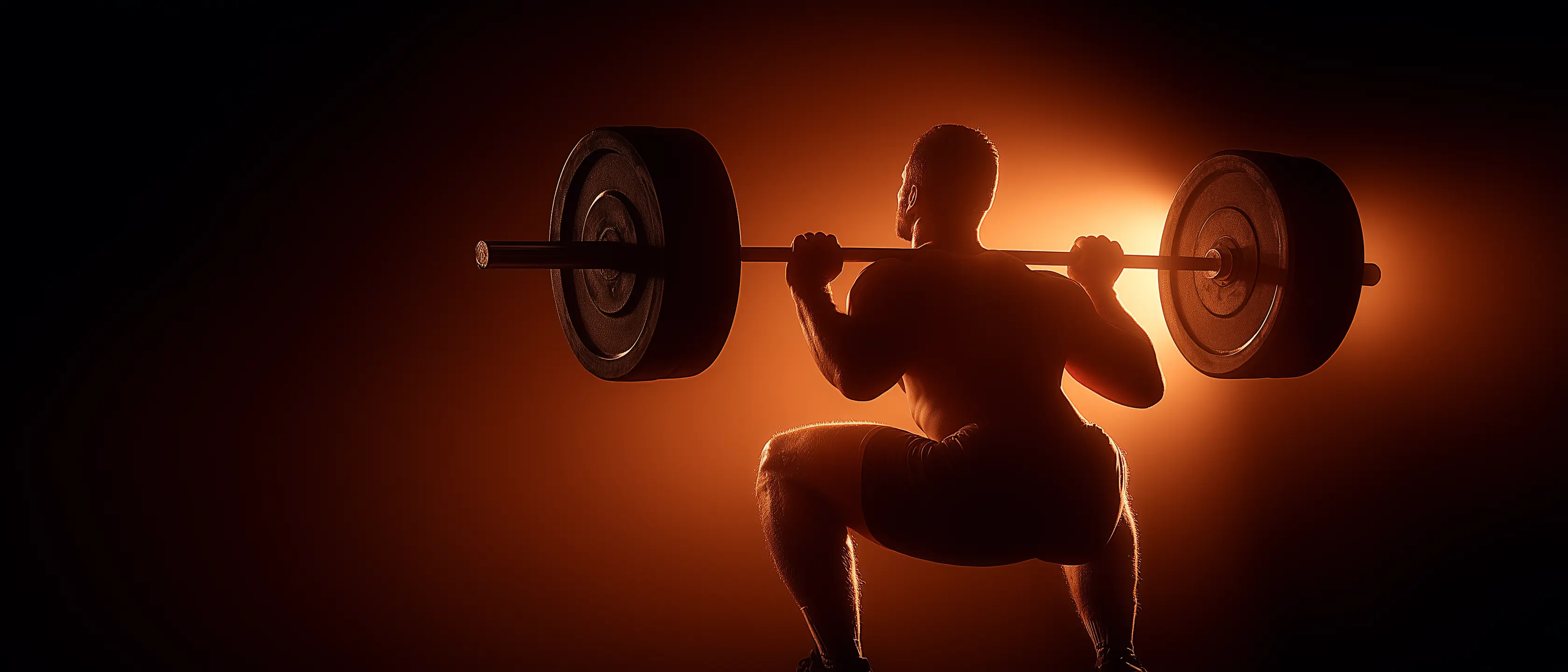
“How deep should I squat?” ranks among the most debated questions in any gym. You’ll hear everything from “ass to grass or it doesn’t count” to “parallel is enough” to “quarter squats build explosive power.”
Here’s what the research actually shows — and why the answer matters for your 5x5 progress. If you’re new to the squat or any of the other barbell movements, start with our exercise guide.
The Short Answer
Your hip crease should drop below the top of your knee. This is called “below parallel” and it’s the standard for 5x5 training.
Not ass-to-grass. Not thighs parallel to the floor. Below parallel — where your hip joint sits lower than your knee joint at the bottom position.
Why Depth Matters
A 2012 study in the Journal of Strength and Conditioning Research compared muscle activation across different squat depths. Full squats (hip crease below knee) produced 25% greater glute activation than parallel squats and significantly more quad development.
But here’s what most people miss: partial squats actually put MORE stress on your knees, not less.
When you cut a squat high, you reverse direction while the knee is still bearing maximum load. Going deeper shifts the stress to your hips and distributes force across more muscle tissue. The deeper position is mechanically safer.
How to Check Your Depth
You can’t feel squat depth accurately while lifting. Everyone thinks they’re going lower than they are.
Option 1: Video from the side Set your phone at knee height, 45 degrees to your side. Watch the replay and look for your hip crease relative to your knee.
Option 2: Box squat test Find a box or bench that puts your thighs just below parallel when seated. Squat to it (don’t sit — just touch) and stand back up. That’s your target depth.
Option 3: Training partner Have someone watch from the side and call your depth. This only works if they know what to look for.
Common Depth Limiters
Ankle Mobility
If your heels rise or you fall backward at depth, your ankles lack dorsiflexion. Test this: kneel with one foot flat on the ground. Push your knee forward. If it can’t pass your toes by 4-5 inches, you need work.
Fix: Spend 2 minutes daily in a deep squat hold. Elevate your heels on small plates while you build mobility. Ankle stretches against a wall, 30 seconds each side.
Hip Mobility
If you get a pinching sensation in your hip crease at depth, or your lower back rounds aggressively, hip flexors are likely tight.
Fix: 90/90 hip stretches. Pigeon pose. Frog stretch. 5 minutes before every squat session.
Stance Width
Some people need a wider stance to hit depth. Your hip anatomy determines this — femur length, hip socket angle, and pelvis width all vary.
Experiment: Try feet at shoulder width, then 2 inches wider, then 2 inches narrower. Film each. Most people find their comfortable depth at one specific stance.
Toe Angle
Your toes should point the same direction as your knees. For most people, this means 15-30 degrees outward. Too narrow or too straight limits depth and puts lateral stress on the knee.
The “Butt Wink” Question
Butt wink is posterior pelvic tilt at the bottom of the squat — your lower back rounds under. Small amounts are normal and not dangerous. Large amounts indicate you’re going past your current mobility.
If your butt wink is excessive:
- Stop just before it starts (this becomes your working depth)
- Work on hip and ankle mobility
- Gradually increase depth as mobility improves
Chasing depth with a rounded lower back loads your spine poorly. Better to hit honest depth than fake depth with bad mechanics.
Squat Shoes vs Flat Shoes
Weightlifting shoes have a raised heel (typically 0.75-1 inch). This effectively adds ankle dorsiflexion, making depth easier without mobility work.
They’re not cheating — they’re a tool. Olympic lifters use them. Powerlifters use them. If you plan to squat seriously for years, they’re worth the investment.
But they don’t fix underlying mobility issues. Use them AND work on ankle flexibility.
What About Going Deeper Than Parallel?
Ass-to-grass squats have their place. Olympic weightlifters need them for the catch position in cleans and snatches. Some bodybuilders use them for maximum muscle stretch.
For 5x5 strength training, below parallel is sufficient. Going deeper:
- Often reduces the weight you can lift
- Requires excellent mobility to maintain position
- Isn’t necessary for strength or muscle development
If you have the mobility and want to go deeper, fine. But don’t sacrifice weight or form chasing unnecessary depth.
The “Partial Squat” Excuse
“I only do quarter squats for explosive power.”
This is usually cope. Yes, some athletes use partial squats for sport-specific training. But they also full squat for base strength.
Quarter squats:
- Build strength only in the top portion
- Create muscular imbalances
- Often allow ego-lifting with weights you can’t actually squat
- Provide less muscle growth per rep
If you’re doing 5x5, squat to depth. The program is designed around full range of motion movements.
Programming for Depth
If you currently can’t hit depth:
Week 1-2: Squat with just the bar, focusing only on depth. Do 3x10 daily.
Week 3-4: Add goblet squats with a light dumbbell. The front load helps you sit back and hit depth.
Week 5+: Return to barbell squats. Start light and only add weight when depth is consistent.
This might feel like going backward. It’s not. Building the pattern correctly now prevents years of fighting depth issues later.
Start Training Today
Depth issues are fixable. Mobility can improve. Patterns can be relearned. But you need to actually work on it, not just think about it.
The complete squat guide covers the full movement setup, the exercise guide has form cues for all five lifts, and the 5x5 training guide shows how squats fit into the program.
Track every rep with Lift5x5 and watch your squat numbers climb — at proper depth.
Track your 5x5 progress automatically
Built-in plate calculator, rest timer, and auto-progression. Free for iOS & Android.
Helping lifters get stronger with the simplest program that works. No BS, just barbells.