Low bar vs high bar squat: which is right for you?
Compare low bar and high bar squat positions for strength, muscle development, and your body type. Learn proper setup for each style.
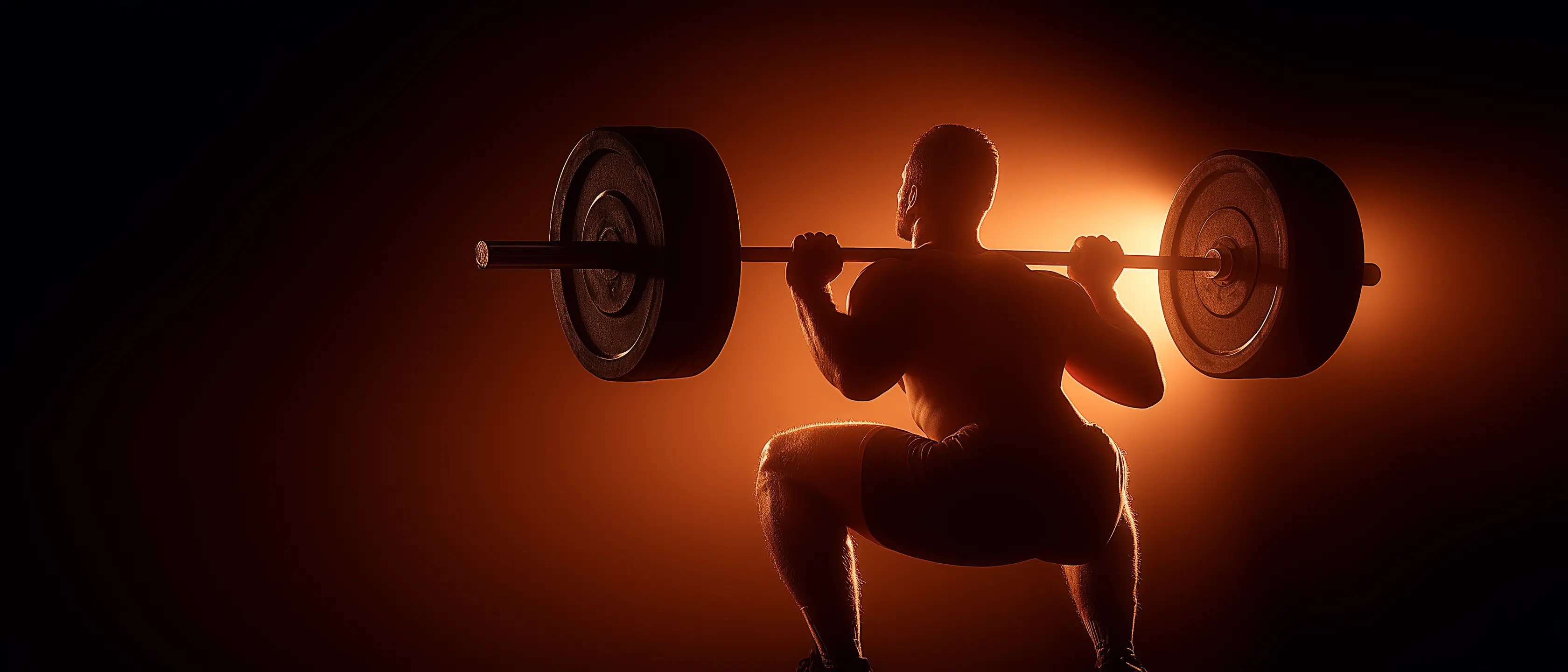
Scroll through any lifting forum and you’ll find heated debate about bar position. Low bar advocates cite powerlifting records. High bar defenders point to Olympic lifters and quad development.
Both positions work. The question is which works better for your goals and body. Our exercise guide walks through proper setup for every barbell lift in the program.
What’s the Difference?
High bar squat:
- Bar sits on your upper traps, at the base of your neck
- Torso stays more upright
- Knees travel further forward
- Depth is typically deeper
- More quad-dominant
Low bar squat:
- Bar sits lower, across your rear deltoids (back of shoulders)
- Torso has more forward lean
- Hips travel further back
- Depth is usually just below parallel
- More hip/posterior chain dominant
The bar position is only 2-3 inches different, but it changes the entire mechanics of the lift.
The Physics Explanation
The barbell creates a load your body must balance. To not fall over, the combined center of mass (your body plus the bar) must stay over your mid-foot.
High bar places the load closer to your natural center of mass. You can stay more upright.
Low bar shifts the load backward. To compensate, you lean forward more and push your hips back. This moves the load to your hips and away from your knees.
A 2015 study in the Journal of Sports Sciences found low bar squats demonstrated 8-10% greater hip torque but 22% less knee torque compared to high bar at the same weight.
Translation: low bar works your hips harder, high bar works your knees harder.
High Bar: Best For
Olympic weightlifters: The catch position in cleans and snatches requires an upright torso. High bar squats train this position.
Quad development: The increased knee flexion means more quad work. If leg size is the goal, high bar delivers.
Deep squatters: If you want to go ass-to-grass, high bar accommodates that better. The upright torso makes extreme depth easier.
Beginners: High bar is generally easier to learn. The bar position is more intuitive and doesn’t require as much shoulder mobility.
People with hip issues: Less forward lean means less hip flexion demand. If your hips feel pinched in low bar, try high bar.
Low Bar: Best For
Powerlifters: Most competitive powerlifters squat low bar because it typically allows more weight. Competition rewards weight on the bar.
Posterior chain emphasis: If you want more hamstring and glute involvement, low bar provides it.
People with knee issues: Less knee flexion and less forward knee travel reduce stress on the joint.
Those who “good morning” their squats: If your hips shoot up faster than your chest in high bar, low bar lets you use that hip strength intentionally.
Long-legged lifters: Low bar accommodates longer femurs better. The hip hinge mechanics match your body proportions.
Setting Up High Bar
- Step under the bar and place it on your traps — the muscle shelf at the base of your neck
- The bar should feel like it’s sitting in a groove, not rolling
- Grip the bar comfortably, hands outside shoulders
- Create tension in your upper back by squeezing shoulder blades together
- Unrack by standing straight up
Common mistake: Placing the bar too high, on the neck bones. This is uncomfortable and unstable. The bar sits on muscle, not spine.
Setting Up Low Bar
- Step under the bar and place it across your rear deltoids — the back of your shoulders
- Find the shelf created when you squeeze your shoulder blades together
- Grip will need to be wider than high bar — experiment to find what’s comfortable
- The bar might feel like it’s going to roll down your back — upper back tightness prevents this
- Unrack by standing up, maintaining forward lean
Common mistakes:
- Placing the bar too low (on the spine) — painful and unstable
- Gripping too narrow — causes wrist and elbow pain
- Not staying tight — the bar will roll
Mobility Requirements
High bar needs:
- Good ankle dorsiflexion
- Hip flexor mobility
- Adequate thoracic extension
Low bar needs:
- Shoulder external rotation
- Wrist flexibility
- Chest/pec mobility
Many lifters start with high bar because they lack the shoulder mobility for comfortable low bar. This isn’t a problem — work on mobility while you build strength with high bar.
Can You Do Both?
Yes. Some programs rotate between styles:
- High bar for volume phases (more reps, lighter weight)
- Low bar for intensity phases (heavier singles and triples)
But for 5x5 training, pick one and stick with it. You’re building a movement pattern. Switching weekly prevents mastery.
If you’re unsure, start with high bar. It’s easier to learn and works well for general strength. Transition to low bar later if you have specific reasons (competition, hip-dominant preference, etc.).
The “Right” Choice
Neither bar position is universally better. High bar built the legs of every Olympic weightlifter. Low bar set every powerlifting squat record.
Consider your goals:
- Powerlifting competition → Probably low bar
- Olympic lifting → Definitely high bar
- General strength and muscle → Either works, try both
- Specific joint issues → Whichever doesn’t hurt
The best squat is the one you can do consistently with good form at progressively heavier weights. Position is secondary to progress.
Making the Switch
If you want to try the other style after months of training one:
Week 1-2: Use 60-70% of your normal weight. Focus on feeling the new positions.
Week 3-4: Build back toward normal weights as the pattern becomes comfortable.
Expect: 2-4 weeks of feeling awkward. Your coordination needs to adapt.
Don’t switch styles mid-program because one day felt off. Commit to learning properly.
For complete squat technique, check out our beginner squat guide, the exercise guide for all five lifts, and the 5x5 training program. Track every session with Lift5x5.
Track your 5x5 progress automatically
Built-in plate calculator, rest timer, and auto-progression. Free for iOS & Android.
Frequently asked questions
Can you squat more with low bar or high bar?
Most people can squat 5-10% more with low bar once they learn the technique. The bar position shortens the moment arm from bar to hips, improving leverage. But this advantage only matters after you've practiced both styles.
Which squat is better for quads?
High bar. The more upright torso and deeper knee travel increases quad involvement. Bodybuilders and Olympic lifters typically use high bar for this reason.
Why does low bar hurt my wrists or elbows?
Usually a setup problem. The bar should rest on your rear delts, not your hands. Your hands just keep it in place. Try a wider grip, work on shoulder mobility, or use a thumbless grip to reduce wrist extension.
Writes the Lift5x5 training blog. Over a decade under the bar running 5x5-style programs — practical strength advice with no BS, just barbells.
More about Erik →