Hip pain during squats: causes and solutions
Hip pain when you squat? Learn the 6 most common causes, mobility drills that help, stance adjustments to try, and when to see a doctor.
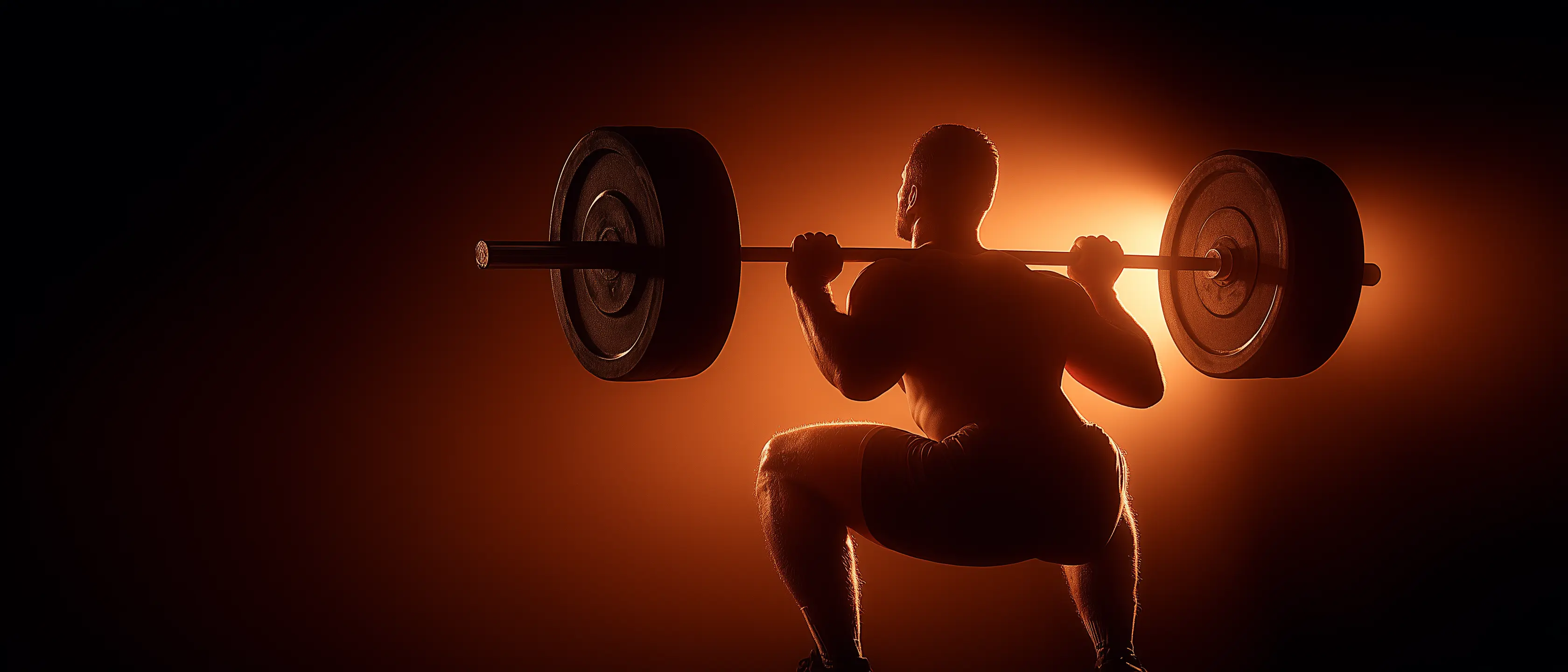
You lower into the squat and feel it — a pinch in the front of your hip, a deep ache in the crease where your leg meets your torso, or a sharp catch that stops you from hitting depth. It might be in one hip or both. It might appear at a certain depth and vanish above it.
Hip pain during squats is frustrating because the squat is central to your 5x5 program and the cause isn’t always obvious. Your knees feel fine. Your back is fine. But something in your hip is telling you to stop going down.
The good news is that most cases are fixable once you identify what’s causing the problem. Here are the six most common causes and what to do about each.
Understanding hip anatomy and squatting
A quick look at the structures involved helps explain why the hip is a common problem area for squatters.
Your hip is a ball-and-socket joint. The ball (the head of the femur) sits inside the socket (the acetabulum, a cup-shaped depression in the pelvis). A ring of cartilage called the labrum lines the rim of the socket, deepening it and providing a seal.
Here’s the critical point most lifters miss: the shape and orientation of both the ball and the socket vary enormously between individuals. Some people have deeper sockets. Some have shallower ones. The angle at which the femoral neck connects to the shaft differs. The orientation of the socket can face more forward or more to the side.
These structural differences are why there is no single correct squat stance. The stance that allows one person to squat deep and pain-free might cause another person to impinge. This isn’t a flexibility problem — it’s a bone structure reality.
Cause 1: hip impingement (femoroacetabular impingement)
This is the most misunderstood cause of hip pain in squatters because it’s partly structural — meaning no amount of stretching will completely fix it if bone is the issue.
What’s happening
Femoroacetabular impingement (FAI) occurs when the ball and socket of the hip don’t move smoothly against each other. There are two types:
Cam impingement: The ball of the femur isn’t perfectly round. It has a bump that catches on the edge of the socket during deep flexion.
Pincer impingement: The socket is too deep or the rim extends too far over the ball, limiting range of motion before bone contacts bone.
Many people have some degree of both (mixed impingement) without knowing it. It only becomes a problem when you try to push the hip into a range of motion it structurally can’t reach — like the bottom of a deep squat.
How it feels
A deep pinching sensation in the front of the hip, usually in the crease between your thigh and torso. It typically appears at a specific depth and gets worse the deeper you go. It’s often one-sided and doesn’t respond to stretching (because it’s bone hitting bone, not a tight muscle).
What to do about it
Adjust your stance. Wider stance with more toe-out moves the femur away from the front of the socket. Many lifters with cam impingement find that a wider, toes-out stance eliminates the pinch entirely.
Limit depth pragmatically. If you get a deep pinch at the bottom despite stance adjustments, squat to just above where the impingement occurs. Below parallel (hip crease below top of kneecap) is deep enough for strength and muscle development — a biomechanical review of squatting depth concluded that, with proper technique, squatting to around parallel does not expose the joints to the extreme loads sometimes assumed. Not everyone needs to squat ass-to-grass, and for some people, it’s structurally inadvisable. The squat depth guide covers this in detail.
Try different bar positions. Low bar squats create a more forward-leaning torso, which changes the hip angle at the bottom. Some lifters with impingement do better with low bar, others with high bar. Experiment.
Get imaging if needed. If you suspect FAI and stance adjustments don’t resolve the issue, an X-ray can reveal cam or pincer morphology. This isn’t always necessary, but knowing your hip structure helps you make informed training decisions rather than guessing.
Cause 2: tight hip flexors
This is the most common cause and, fortunately, the most fixable.
What’s happening
Your hip flexors — primarily the iliopsoas (a combination of the iliacus and psoas major) — cross the front of the hip joint. When they’re short and tight, they limit hip extension and create a pinching sensation at the bottom of the squat as the compressed tissue gets caught between the femur and the pelvis.
Modern life is the primary culprit. Sitting for 8-10 hours a day keeps the hip flexors in a shortened position. They adapt to this shortened length, and when you ask them to lengthen during a deep squat, they resist and protest.
How it feels
Tightness or pinching in the front of the hip, usually both sides but sometimes worse on one side. It often improves after warm-up sets as the tissue lengthens slightly. Unlike impingement, it responds to stretching over time.
What to do about it
Half-kneeling hip flexor stretch. Kneel on one knee with the other foot in front. Squeeze the glute of the back leg hard, tuck your pelvis under (posterior pelvic tilt), and shift your weight slightly forward. You should feel a stretch in the front of the hip of the back leg. Hold for 30-60 seconds each side. Do this daily, not just on training days.
Couch stretch. Place one knee on the floor with the top of that foot against a wall or couch behind you. The other foot is in front in a lunge position. The back leg’s hip flexor gets an intense stretch. This is the most aggressive hip flexor stretch and extremely effective for desk workers.
Standing hip flexor stretch between sets. Between squat sets, do a 20-second hip flexor stretch on each side. This doesn’t replace daily stretching, but it helps maintain hip position during the workout.
Reduce sitting time. If you sit for 8 hours and then try to squat, your hip flexors are fighting you from rep one. Stand for 5 minutes every 30-45 minutes during the workday. Use a standing desk if you have access to one. The stretching matters, but reducing the time spent in the shortened position matters more.
Cause 3: wrong stance for your anatomy
As discussed in the anatomy section, everyone’s hips are built differently. A stance that works perfectly for one person might cause pain in another, and it has nothing to do with flexibility or technique.
What’s happening
If your stance is too narrow for your hip structure, the femur runs into the front of the acetabulum during deep flexion, creating impingement. If it’s too wide, the adductors get overstretched and the femoral head can lose congruity with the socket.
How it feels
Pain or discomfort that consistently appears at the same depth, sometimes more on one side than the other. Changing stance width or toe angle often immediately changes the sensation.
What to do about it
Experiment systematically. Try three different stance widths over three sessions:
- Shoulder width, toes 15 degrees out. The standard starting point.
- Wider than shoulder width, toes 30 degrees out. Allows the femur to drop between the hips instead of running into them.
- Slightly narrower than shoulder width, toes 20 degrees out. Some people actually do better narrower.
Keep everything else the same — weight, depth, tempo. Note which stance feels best in terms of depth, comfort, and pain.
Use the goblet squat as a diagnostic tool. Hold a light dumbbell or kettlebell at your chest and squat. Without a barbell on your back, you can freely experiment with stance width, toe angle, and depth. Find the position where you feel strongest and most comfortable, then replicate that stance under the barbell.
Accept asymmetry. Many people have slightly different hip structure on each side. If your right hip impinges at a certain depth but your left doesn’t, that’s normal anatomical variation. Your stance needs to accommodate the more restricted hip.
Cause 4: squatting too deep for your current mobility
There’s a depth at which your pelvis begins to tuck under — the lumbar spine goes from neutral or slightly extended to flexed. This is called “butt wink.” For some lifters, the depth at which this happens coincides with a compression of the hip structures that causes pain.
What’s happening
Below a certain point, your hip flexion mobility runs out. Your body compensates by tilting the pelvis posteriorly (tucking the tailbone under). This changes the hip joint mechanics and can create impingement, labral stress, or anterior hip compression.
How it feels
Pain or pinching that appears only at the deepest part of the squat. Above that point, everything feels fine. You might also notice your lower back rounds at the same depth.
What to do about it
Find your pain-free depth and train there. Gradually work on improving it rather than forcing depth you can’t maintain with good mechanics. Below parallel is deep enough for full strength development.
Improve hip flexion mobility. The goblet squat hold is excellent for this: hold the bottom of a goblet squat with good position for 30-60 seconds. The weight acts as a counterbalance and lets you sit deeper with better mechanics. Do this daily.
Address ankle mobility. Poor ankle dorsiflexion forces more hip flexion at the same depth, accelerating the point at which your hips run out of range. Heeled weightlifting shoes or small plates under your heels can make a significant difference. The squat depth guide covers this in more detail.
Work on it gradually. Mobility improvements are measured in millimeters over weeks, not inches over days. Be patient. A few degrees of additional hip flexion might be all you need to squat comfortably to full depth.
Cause 5: weak glutes
Weak glutes can cause hip pain through two mechanisms: compensatory movement patterns and inadequate hip stabilization.
What’s happening
Your glutes are the primary hip extensors and play a critical role in controlling the descent and driving the ascent of the squat. When they’re weak relative to the load, your body compensates.
Hip shift. Your hips may shift to one side during the ascent, overloading one hip joint. This is most visible from behind — one hip rises faster than the other, or your whole body drifts to one side.
Excessive hip flexor loading. When the glutes don’t pull their weight (literally), the hip flexors work harder to stabilize the joint. This overloads them and can create the pinching sensation at the front of the hip.
How it feels
A vague, deep ache in one or both hips, often worse during or after high-rep sets. You might notice your squat looks asymmetrical on video. The pain may not appear until the weight gets moderately heavy.
What to do about it
Glute activation before squats. 2-3 sets of the following before your first squat warm-up set:
- Glute bridges: 15 reps, squeezing hard at the top
- Clamshells with a band: 12 each side
- Lateral band walks: 10 steps each direction
Single-leg work. Bulgarian split squats and single-leg Romanian deadlifts expose and correct side-to-side imbalances. If one hip hurts more than the other, that side is likely weaker. Add 2-3 sets of single-leg work to two sessions per week as accessory work.
Film your squat from behind. Watch for hip shift during the ascent. If you see it, reduce the weight until you can squat symmetrically. Then build back up with balanced mechanics.
Cause 6: adductor strain
The adductors (inner thigh muscles) originate on the pelvis and attach along the length of the femur. They play a significant role in squatting, especially with a wider stance.
What’s happening
If you take a wide stance without adequate preparation — or if you go wider than your adductors can handle — the inner thigh muscles get overloaded. This creates pain along the inner groin area that can feel like it’s coming from the hip itself.
How it feels
Pain on the inner thigh or groin, particularly during the descent into the squat. Wider stances make it worse. It may be tender to the touch along the inner thigh. Unlike hip impingement, this feels muscular rather than joint-based.
What to do about it
Narrow your stance temporarily. If the wide stance is aggravating your adductors, bring your feet in until the pain stops. A narrower stance loads the adductors less.
Gradual stance widening. If you want to squat wider (which may help with other hip issues like impingement), widen your stance gradually over weeks, not overnight. Give the adductors time to adapt to the increased demand.
Adductor stretching. The 90/90 stretch and the frog stretch specifically target the adductors. Hold for 30-60 seconds, 2-3 times on each side.
Warm up the inner thigh. Light adductor work before squats — lateral lunges, sumo stance bodyweight squats, or a few minutes on an adductor machine at light weight — prepares the tissue for the demands of a wider squat stance.
Mobility drills for hip health
These four movements address the most common mobility limitations that cause hip pain during squats. Spend 10-15 minutes on them, 3-4 times per week. You don’t need to do all of them every time — pick the ones that address your specific issues.
90/90 stretch
Sit on the floor with one leg bent in front of you at 90 degrees (shin perpendicular to your body) and the other behind you, also at 90 degrees. Your front shin should be roughly parallel to your shoulders. Sit up tall and lean your torso forward over the front leg. Hold for 30-60 seconds, then switch sides.
This simultaneously stretches the external rotators of the front hip and the internal rotators of the back hip. If one side feels dramatically tighter, that’s the side to focus on.
Pigeon pose
From a push-up position, bring one knee forward and place it behind the corresponding wrist. Extend the back leg straight behind you. Lower your torso toward the ground. Hold for 30-60 seconds each side.
If the full pigeon is too intense, do it on an elevated surface — a bench or a box — so you control how deep you go. This is an intense hip external rotation stretch and shouldn’t be forced.
Hip circles (controlled articular rotations)
Stand on one leg. Lift the opposite knee to hip height, then rotate the leg out to the side, back behind you, and down. Reverse the circle. Do 5-8 controlled circles in each direction on each leg.
These map the full range of motion of the hip joint and identify any positions of restriction or discomfort. Think of them as both a warm-up and a diagnostic tool.
Goblet squat hold
Hold a light dumbbell or kettlebell at your chest. Squat to the deepest comfortable position with good form. Use the weight as a counterbalance. Push your knees out with your elbows. Hold for 30-60 seconds.
This is the most squat-specific mobility drill available because it’s literally a squat. It opens the hips under load in the exact position you’re trying to improve.
When to see a doctor
Not all hip pain requires medical attention, but some does. See a sports medicine professional or physiotherapist if:
- Pain persists for more than 2-3 weeks despite mobility work and stance adjustments
- Pain is sharp, catching, or locking (not just tight or achy)
- Pain occurs during daily activities, not just squatting (walking up stairs, getting out of a car)
- You feel a click or catch at a specific point in the range of motion
- One hip is dramatically more restricted than the other
- Pain wakes you up at night
Early intervention is almost always better than waiting. A physiotherapist can perform specific tests to differentiate between impingement, labral issues, tendinitis, bursitis, and muscular problems — each of which requires a different approach. The international Warwick Agreement on FAI syndrome emphasises that a diagnosis requires the combination of symptoms, clinical signs, and imaging — not imaging findings alone. If your symptoms point that way, see a doctor about persistent hip pain.
Your hips are solvable
Hip pain during squats feels discouraging, but it’s one of the most responsive issues to address. Most lifters find their fix through some combination of stance adjustment, targeted mobility work, and load management.
Don’t accept hip pain as the price of squatting. And don’t avoid squatting because of hip pain. Find the cause, apply the fix, and get back to building strength. For technique cues on the squat and all five lifts, see the exercise guide.
If your hip pain is part of a broader pattern, the guides on injury prevention for lifters and training around injuries cover strategies for staying productive while you address the issue.
Track your squat weights, stance adjustments, and what works for your body:
Track your 5x5 progress automatically
Built-in plate calculator, rest timer, and auto-progression. Free for iOS & Android.
Frequently asked questions
Should I squat through hip pain?
It depends on the type and location. A mild tightness in the front of the hip that improves after warm-up sets is usually okay to work through while addressing the underlying mobility issue. Sharp, pinching pain deep in the hip socket — especially at the bottom of the squat — means stop. This type of pain often indicates impingement, and pushing through it can damage the labrum (the cartilage lining the hip socket). When in doubt, reduce depth, lighten the load, and see a professional.
Is it normal for hips to crack or pop during squats?
Painless cracking or popping is usually harmless. It's typically caused by tendons sliding over bony prominences or gas bubbles releasing in the joint fluid (similar to cracking your knuckles). If the popping is accompanied by pain, catching, or a sense of the joint locking, that's a different story and warrants medical evaluation.
Can tight hip flexors really cause squat pain?
Yes. Tight hip flexors limit your ability to fully extend the hip, which creates compensation patterns during squats. They can also create a pinching sensation at the front of the hip at the bottom of the squat as the shortened tissue gets compressed. Desk workers are especially prone to this because sitting for hours keeps the hip flexors in a shortened position all day.
How wide should my squat stance be?
There's no universal answer because hip anatomy varies. Start with feet roughly shoulder-width apart and toes pointed out 15-30 degrees. If that causes hip pain, experiment: wider with more toe-out, or slightly narrower. The right stance is the one where you can reach adequate depth with a neutral spine and no pain. Some people squat best at shoulder width, others need a wide sumo-style stance.
Will hip pain from squats go away on its own?
Minor tightness and mobility-related pain often improves with consistent stretching and mobility work over 2-4 weeks. Impingement or structural issues typically don't resolve on their own and may worsen with continued squatting. If your hip pain hasn't improved after 2-3 weeks of dedicated mobility work and stance adjustments, see a professional. Early intervention almost always leads to faster and better outcomes.
Writes the Lift5x5 training blog. Over a decade under the bar running 5x5-style programs — practical strength advice with no BS, just barbells.
More about Erik →