Box squats for building squat strength
Learn how box squats build explosive strength out of the hole, teach consistent depth, and reduce knee stress. Complete technique and programming guide.
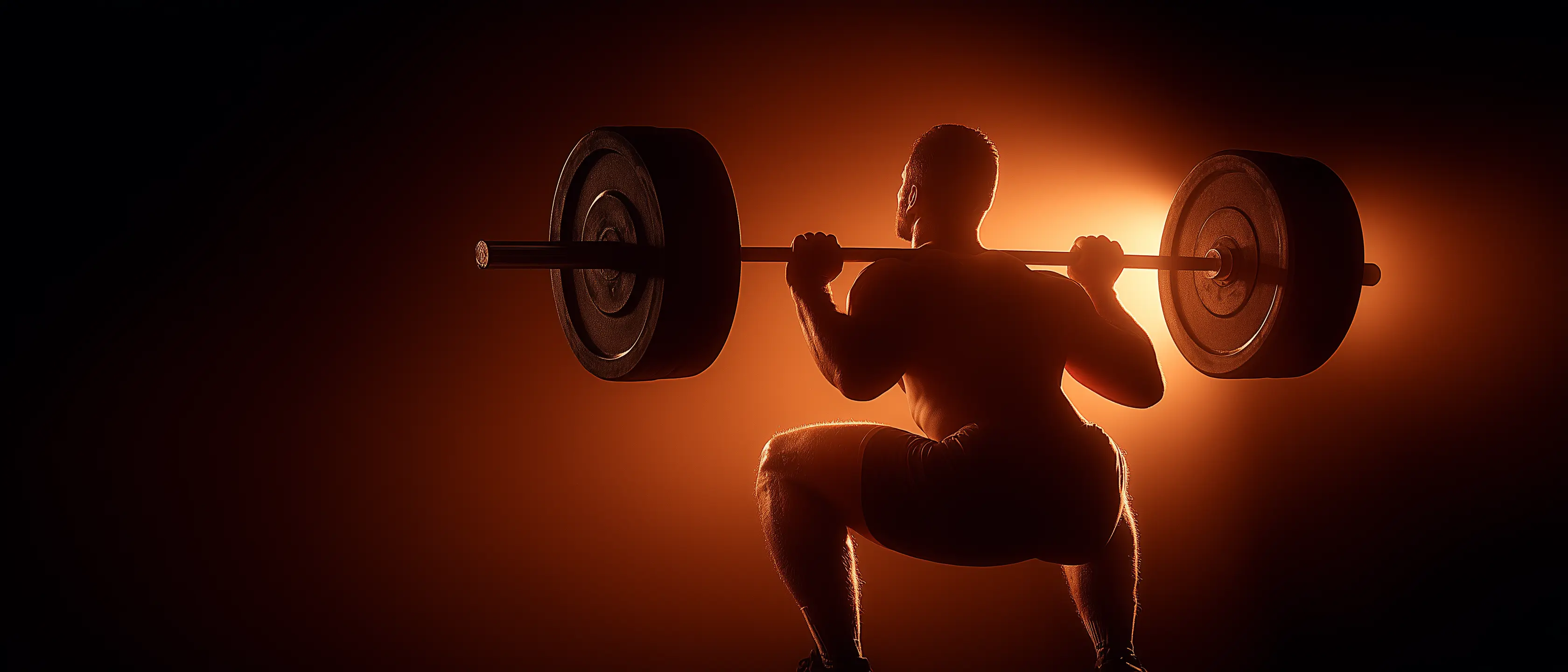
You know the feeling. You descend into a squat, hit the bottom, and it’s like running into a wall. The weight pins you down. Your legs burn. You grind through the rep or you don’t.
That bottom position - the hole - is where most squatters fail. And the box squat is one of the most effective tools for making you stronger right there.
Box squats aren’t new or trendy. Westside Barbell popularized them decades ago, and competitive powerlifters have used them as a staple accessory alongside the main compound exercises ever since. They work because they eliminate the one thing regular squats give you for free: momentum.
What is a box squat
A box squat is a squat performed to a box, bench, or platform. You descend until you’re sitting on the box, pause briefly, then stand back up.
That pause changes everything. In a regular squat, the stretch reflex at the bottom stores elastic energy in your tendons and muscles, giving you a boost as you start to stand. It’s like a rubber band - you stretch it down and it snaps you back up.
The box eliminates that. When you sit, even briefly, the stretch reflex dissipates. Now you have to generate force from a complete stop, with a loaded barbell on your back, from the hardest position in the squat.
This builds raw, honest strength out of the hole. The kind of strength that makes regular squats feel easier because you’ve trained the hardest part under worse conditions.
Benefits of box squats
Consistent depth every rep
One of the biggest challenges for new squatters is hitting the same depth on every rep. Some reps are high, some are deep, and you’re never quite sure if you went low enough.
The box solves this mechanically. Your butt hits the box at the same point every single time. There’s no guessing. You either touched the box or you didn’t.
This is especially useful if you’re someone who tends to cut squats high when the weight gets heavy. The box forces honesty.
Strength out of the hole
As mentioned, the pause at the bottom kills the stretch reflex. This means every rep requires you to generate concentric force from a dead stop.
Over time, this builds explosive power from the bottom position. When you return to regular squats, that position where you used to stall suddenly feels more manageable because you’ve trained it under harder conditions.
If your squat has plateaued and you keep failing at or near the bottom, box squats directly address that weakness.
Reduced knee stress
The box squat encourages a wider stance and a more vertical shin angle compared to regular squats. Instead of your knees tracking far forward over your toes, you sit back onto the box with your shins nearly vertical.
This shifts more load to the hips and posterior chain (glutes, hamstrings) and reduces shear force on the knees. For lifters dealing with knee discomfort during regular squats, box squats can allow productive training while the knees recover.
This doesn’t mean box squats are a workaround for bad squat form. But they can be a useful tool in your toolkit if knee stress is a concern.
Learning to sit back
Many beginners squat by breaking at the knees first and pushing them forward. This turns the squat into a knee-dominant movement. The box teaches you to break at the hips first and sit back, loading your posterior chain properly.
When you know there’s a box behind you, you naturally push your hips back to find it. This hip hinge pattern is exactly what you want in a strong squat.
Proper box squat form
Setting up the box
Place a box, bench, or stack of plates in the squat rack where the barbell will be directly above it when you squat. The top surface should be at a height where, when you sit on it, your hip crease is at or slightly below your kneecap.
For most people using a standard gym bench, this is close to the right height. If it’s too high, add a plate on top. If it’s too low, stack plates or use a different surface.
The surface should be stable and flat. Don’t use anything that might tip or slide. A sturdy plyo box or a flat bench inside the rack works well.
Stance
Take a slightly wider stance than your regular squat - about shoulder-width or a touch wider. Toes pointed out 20-30 degrees. This wider stance accommodates the sit-back pattern and helps keep your shins vertical.
Unrack the bar as you would for any back squat. Walk it out, set your stance, brace your core.
The descent
Break at the hips first. Push your hips back and down toward the box. Your knees will bend naturally, but the movement should feel like you’re sitting into a chair behind you, not dropping straight down.
Keep your shins as vertical as possible. In a regular squat, your knees push forward over your toes. In a box squat, your shins stay close to vertical and your hips do the work.
Descend under control. Don’t dive-bomb onto the box. Sit down deliberately, like you’re sitting on a chair you’re not sure can hold you.
The sit
This is what makes it a box squat. When your glutes contact the box:
- Transfer some weight to the box. You’re sitting, not hovering.
- Pause for 1-2 seconds. This kills the stretch reflex.
- Keep your core braced. Do NOT relax your midsection. Your abs and back stay tight.
- Keep your upper back tight. The bar doesn’t shift.
- Maintain your shin angle. Don’t let your knees drift forward during the pause.
The most important point: sit but don’t relax. If you completely relax your core on the box with a heavy barbell on your back, you’re asking for a lower back injury. Stay tight. You’re pausing, not resting.
The drive
After the brief pause, explode off the box. Drive your upper back into the bar and push your feet through the floor. Think about driving your traps into the bar rather than trying to stand up with your legs.
This should be aggressive. You’re generating force from zero momentum, so the intent needs to be maximal. Even if the bar moves slowly, your effort should be 100%.
Lock out at the top: hips forward, knees straight, standing tall. That’s one rep.
Box height matters
At parallel
The standard recommendation. When seated, your hip crease is level with the top of your kneecap. This replicates the depth of a competition squat and trains the exact position where most people fail.
Slightly below parallel
An inch or two below parallel trains a deeper range of motion. This is good if you want to build strength at a depth beyond what you normally squat. Use this sparingly - the deeper the box, the harder it is to maintain a flat back.
Above parallel (quarter squats)
Sometimes used for sport-specific training (sprinters, jumpers), but mostly useless for building squat strength. If you can’t go to at least parallel on the box, you’re training an incomplete range of motion.
For 5x5 purposes, stick with parallel or slightly below.
Programming box squats
Box squats are a tool, not a replacement. Your regular back squat remains the main exercise in 5x5. Here’s how to fit box squats in.
As an accessory after main squats
The simplest approach. Do your regular 5x5 squats, then add box squats as back-off work.
Example:
- Squat: 5x5 at working weight
- Box squat: 3x5 at 60-70% of your squat working weight
This adds roughly 10 minutes and 15 reps of targeted bottom-position work. Use this approach when you want consistent extra practice without dramatically changing your program.
As a short-term variation
If your squat is stalled and you want to shake things up, you can substitute box squats for regular squats for 2-3 weeks. Use the same 5x5 scheme but at a lower weight (start at about 70% of your regular squat).
After the block, return to regular squats. Many lifters find they break through plateaus after a few weeks of box squats because they’ve strengthened the bottom position.
Don’t replace regular squats permanently. The full range of motion with stretch reflex intact is important for complete squat development.
Weight selection
Start conservative. The pause eliminates the stretch reflex, so you’ll be weaker than you expect. Most people box squat about 70-80% of their regular squat.
If you normally squat 100kg for 5x5, start box squats at 60-70kg and work up from there. The goal is quality reps with a clear pause, not grinding heavy singles.
Progression
Add weight the same way you add weight on your main lifts: when you complete all prescribed reps with good form, add 2.5kg next session.
If using box squats as an accessory at 3x5, progress them independently from your main squat. They don’t need to keep pace.
Who benefits most
Lifters who struggle with depth
If you consistently cut squats high when the weight gets challenging, box squats give you a physical target. You either hit the box or you don’t. After a few weeks of box squats, your depth awareness on regular squats improves dramatically.
Lifters who are weak out of the hole
If you can descend fine but get stuck at the bottom of every heavy squat, the box squat addresses that directly. The pause eliminates the stretch reflex and forces you to build strength from the exact position where you fail.
This is the primary reason competitive powerlifters have used box squats for decades - it makes you stronger where you’re weakest.
Lifters with knee issues
The vertical shin angle and posterior chain emphasis reduce knee stress compared to regular squats. If your knees are bothering you but you don’t want to stop squatting entirely, box squats can let you train around the issue while staying productive.
This isn’t a substitute for addressing the root cause of knee pain. But it can keep you training while you sort it out. Our guide on squat and knee pain covers this in more detail.
Lifters learning to increase their squat
Box squats teach two critical skills: sitting back into the hips and generating force from the bottom. Both translate directly to a stronger regular squat. If you’ve been stuck at the same weight for weeks and need a new stimulus, box squats are worth a 2-3 week trial.
The Westside influence
Box squats became widely known through Louie Simmons and Westside Barbell, one of the most successful powerlifting gyms in history. Westside used box squats as a primary squat variation, not just an accessory.
Their approach was specific: wide stance, vertical shins, sit back hard, pause, explode. They trained box squats twice per week - one day heavy, one day with bands or chains for speed.
You don’t need to follow the full Westside method. But understanding where box squats come from helps appreciate why they work: they were developed by lifters who needed to squat enormous weights and found that training from a dead stop made them stronger at the hardest part of the lift.
Not a replacement
Box squats are a powerful supplementary tool, but they’re not a replacement for regular squats on 5x5. The regular back squat trains the full movement with the stretch reflex intact, which is how you’ll actually squat in the gym and in life.
Think of box squats like targeted practice for your weakest position. Use them when you need them, put them away when you don’t, and always prioritize the main movement.
Your squat will thank you for the extra work at the bottom. For technique guides on the squat and every other 5x5 movement, visit the exercise guide.
Track your 5x5 progress automatically
Built-in plate calculator, rest timer, and auto-progression. Free for iOS & Android.
Frequently asked questions
Should I replace regular squats with box squats on 5x5?
No. The regular back squat is the foundation of the program and should remain your primary squat variation. Box squats work best as a supplementary tool - use them as an accessory after your main squats, or for a short 2-3 week block to address a specific weakness before returning to regular squats.
How high should the box be?
Set the box so that when you sit on it, your hip crease is at or slightly below your knee. This corresponds to parallel or just below parallel depth. If the box is too high, you don't get full range of motion. If it's too low, your lower back may round at the bottom.
Should I fully sit on the box or just touch it?
Sit on the box. Transfer some weight to it and pause briefly, usually 1-2 seconds. However, don't relax completely - keep your core braced and your upper back tight. The pause eliminates the stretch reflex and forces you to generate force from a dead stop.
Can beginners do box squats?
Beginners should focus on learning the regular back squat first. Box squats can actually help beginners who struggle with depth consistency or who are afraid of going too deep, but they shouldn't replace regular squats in the program. Wait until you've been squatting consistently for at least 3-4 months.
Why do box squats feel harder with less weight?
Because you're eliminating the stretch reflex. In a regular squat, the stretch reflex at the bottom helps you bounce out of the hole. The box removes this by forcing a pause. You're generating force from zero momentum, which is harder but builds raw strength.
Writes the Lift5x5 training blog. Over a decade under the bar running 5x5-style programs — practical strength advice with no BS, just barbells.
More about Erik →