Shoulder impingement and lifting: what to do
A lifter's guide to shoulder impingement. What it is, why it happens, how to train around it, and the rehab exercises that fix the root cause.
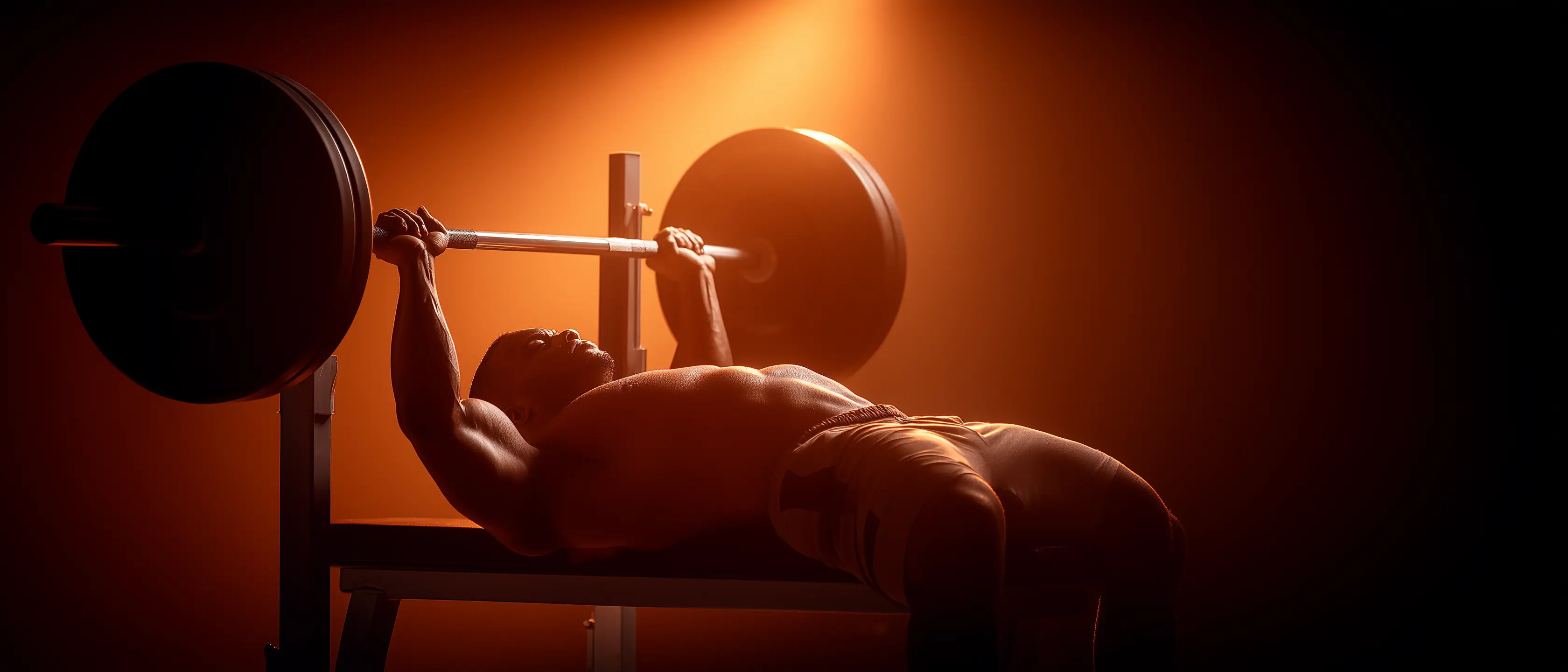
You’re halfway through your bench press sets when you feel it. A pinching sensation in the front of your shoulder, right at the top of the movement. Maybe it’s been creeping in for weeks during overhead press too. You push through for a while, but it’s getting worse, not better.
This is textbook shoulder impingement. It’s one of the most common injuries in lifters — particularly those performing the pressing movements in 5x5 — and according to the NHS, shoulder impingement is the most common shoulder problem, affecting around 1 in 5 people at some point. The good news is that it’s almost always fixable without surgery and without giving up training entirely.
But you need to handle it correctly. Ignoring it makes it worse. Stopping all training is overkill. The right approach sits in between.
What shoulder impingement actually is
The basic anatomy
Your shoulder is a complex joint. The humerus (upper arm bone) sits in a shallow socket on the scapula (shoulder blade). Above the joint is a bony arch called the acromion. Between the acromion and the humeral head runs a narrow space - the subacromial space - through which several structures pass:
- The supraspinatus tendon - part of the rotator cuff, it helps lift your arm
- The biceps tendon - runs through a groove at the front of the shoulder
- The subacromial bursa - a fluid-filled sac that reduces friction between the tendon and the bone
When everything works properly, these structures glide smoothly through the subacromial space during arm movements. When something goes wrong, they get pinched.
What happens during impingement
Shoulder impingement occurs when the subacromial space narrows, compressing the tendons and bursa between the humeral head and the acromion. Each time you raise your arm - especially overhead or during pressing movements - the pinched structures get irritated further.
Over time, this irritation causes inflammation, swelling, and pain. The swelling further narrows the space, creating a cycle: impingement causes inflammation, inflammation causes more impingement.
If left unchecked, chronic impingement can weaken and fray the rotator cuff tendons, eventually leading to partial or complete tears.
Common symptoms
Shoulder impingement typically presents as:
- Pain when raising the arm - especially between 60-120 degrees of elevation (the “painful arc”)
- Pain during pressing movements - bench press, overhead press, push-ups
- Aching after training - a dull throb in the front or side of the shoulder that lingers for hours
- Pain when reaching behind your back - like reaching for a wallet in a back pocket
- Night pain - lying on the affected shoulder can compress the space further
- Weakness - particularly when lifting the arm to the side or overhead
The pain is usually localized to the front or side of the shoulder, sometimes radiating down the upper arm. It’s different from muscle soreness, which is diffuse and bilateral. Impingement pain is specific, one-sided, and position-dependent.
Why lifters get impingement
Shoulder impingement in lifters is rarely random. There are specific mechanical and training-related causes.
Training imbalances
This is the biggest culprit. Most lifters dramatically overemphasize pushing movements (bench press, overhead press) relative to pulling movements (rows, face pulls, external rotations).
The muscles responsible for pressing - pectorals, anterior deltoids - internally rotate the shoulder. The muscles responsible for pulling - rear deltoids, rhomboids, external rotators - counterbalance this by pulling the shoulder back and down.
When pushing dominates pulling, the shoulder sits in a chronically internally rotated position. The humeral head migrates forward and upward in the socket, narrowing the subacromial space. Every press you do in this position compresses the tendons a little more.
Poor scapular mechanics
Your scapulae (shoulder blades) need to move in coordination with your arm during pressing and overhead movements. Specifically, they need to upwardly rotate and tilt posteriorly as your arm goes overhead.
When the muscles controlling scapular movement are weak or inhibited - which happens from excessive sitting, poor posture, and neglecting upper back work - the scapulae don’t move properly. The acromion doesn’t tilt out of the way during overhead movements, and the subacromial space gets narrowed.
This is why two lifters can do the same overhead press with the same weight and one gets impingement while the other doesn’t. It’s not the exercise. It’s the mechanics.
Poor bench press form
Several bench press form errors contribute directly to impingement:
- Elbow flare at 90 degrees - maximally narrows the subacromial space under load
- No scapular retraction - allows the shoulder to roll forward during the press
- Excessive range of motion - letting the bar sink deep into the chest stretches the anterior shoulder under load
- Grip too wide - increases the stretch and stress on the shoulder at the bottom position
For a complete breakdown of how to fix these issues, read the bench press shoulder pain guide.
Excessive volume without adequate recovery
Even with good form and balanced training, too much pressing volume without adequate rest can overwhelm the shoulder’s ability to recover. The rotator cuff tendons have relatively poor blood supply compared to muscles, which means they heal more slowly.
Three heavy pressing sessions per week is generally fine for healthy shoulders. But adding extra bench work, dips, push-ups, and shoulder accessories on top of your main program can cross the threshold into overuse territory.
Step 1: get a proper diagnosis
Before you self-treat, get properly assessed. This is not optional.
Why diagnosis matters
Shoulder impingement shares symptoms with several other conditions:
- Rotator cuff tears (partial or complete)
- Labral tears
- AC joint problems
- Biceps tendinopathy
- Frozen shoulder (adhesive capsulitis)
The treatment for each is different. What helps impingement can worsen a labral tear. What helps a rotator cuff strain is wrong for a frozen shoulder.
Who to see
A sports physiotherapist or sports medicine doctor is your best first stop. They can perform specific clinical tests (Neer’s test, Hawkins-Kennedy test, Empty Can test) to identify impingement versus other conditions.
If the clinical picture is unclear, they may order imaging - an ultrasound or MRI - to see the soft tissue structures directly.
Skip Dr. Google. A 15-minute assessment with a qualified professional gives you more useful information than weeks of internet research.
Step 2: modify your training
You don’t need to stop training. You need to stop doing the specific things that aggravate the impingement.
Exercises to modify or avoid temporarily
Overhead press - Usually the most aggravating movement. Eliminate it during the acute phase. You can substitute with a landmine press, which places the shoulder in a less compromised angle.
Bench press - Try these modifications before eliminating it entirely:
- Narrow the grip by 1-2 finger widths
- Use dumbbells instead (allows more natural shoulder rotation)
- Reduce range of motion with a floor press or board press
- Focus intensely on scapular retraction throughout every rep
Upright rows - Eliminate completely. This movement forces the shoulder into internal rotation under load at the exact angle that maximizes impingement.
Dips - Often aggravating because of the deep shoulder extension at the bottom. Eliminate if they cause pain.
Lateral raises - Internal rotation during the lift (the “pouring water” cue) is specifically problematic. If you do them, keep thumbs pointing up.
Exercises that usually don’t aggravate
- Barbell rows and seated cable rows - pulling movements generally decompress the subacromial space
- Pull-ups and lat pulldowns - as long as you avoid behind-the-neck variations
- Squats and deadlifts - no shoulder involvement in the impingement-relevant planes
- Face pulls - these actually help by strengthening the external rotators
- Curls and tricep extensions - typically pain-free since they don’t involve the impingement angle
The general principle is simple: if a movement causes pain in the shoulder, stop that specific movement. If it doesn’t hurt, you can keep doing it. Pain is the signal. For more strategies on how to train around injuries, follow the link.
Step 3: rehab exercises
These exercises target the muscles and movement patterns that correct the underlying cause of impingement. They are not just hopeful folk wisdom: a randomised controlled trial in the BMJ found that a structured programme of rotator cuff and scapular strengthening dramatically cut the need for surgery in patients with subacromial impingement. Perform them 3-4 times per week, ideally as part of your warm-up before training.
External rotations with band
Why: Strengthens the infraspinatus and teres minor, which externally rotate the humerus and help center it in the socket, opening the subacromial space.
How: Stand with your elbow pinned to your side at 90 degrees. Hold a resistance band in the hand of the affected arm, anchored at waist height to your opposite side. Rotate your forearm outward against the band’s resistance, keeping your elbow glued to your side.
Sets/reps: 3 x 15-20 per arm, light resistance. This is rehab, not strength training. Control beats load.
Face pulls
Why: Strengthens the rear deltoids, rhomboids, and external rotators simultaneously. Directly counterbalances the internal rotation pattern from excessive pressing.
How: Set a cable or band at face height. Pull toward your face with elbows high, rotating your hands outward at the end so your forearms are vertical. Squeeze your shoulder blades together at the end of each rep.
Sets/reps: 3 x 15-20, moderate resistance.
Scapular wall slides
Why: Trains proper scapular upward rotation and posterior tilt - the exact movements that are typically impaired in impingement.
How: Stand with your back against a wall. Place your forearms against the wall with elbows at 90 degrees (like a goalpost position). Slowly slide your arms up the wall, maintaining contact with your forearms and hands the entire time. Slide up as far as you can without your back arching off the wall, then slide back down.
Sets/reps: 3 x 10, slow and controlled.
YTWL raises
Why: Targets the lower trapezius, middle trapezius, and rotator cuff through multiple planes of scapular movement.
How: Lie face-down on an incline bench or the floor. With light dumbbells or no weight:
- Y - raise arms overhead at a 45-degree angle (like making a Y shape)
- T - raise arms straight out to the sides
- W - pull elbows back with forearms hanging down, then rotate hands up (making a W shape)
- L - elbows at 90 degrees pinned to sides, rotate forearms up
Sets/reps: 2 x 10 of each letter. Start with no weight. Progress to 1-2kg dumbbells maximum.
Band pull-aparts
Why: Builds endurance in the rear deltoids and rhomboids, supporting proper scapular position throughout the day and during training.
How: Hold a band at arm’s length in front of you. Pull it apart by squeezing your shoulder blades together until the band touches your chest. Return slowly.
Sets/reps: 3 x 20, daily if possible. These can be done between sets of pressing exercises or as a standalone routine.
Step 4: fix the root cause
Rehab exercises manage the symptoms and build the muscular foundation for healthy shoulders. But if you go back to the exact same training patterns that caused the impingement, it will come back.
Balance your push and pull volume
The minimum standard: for every set of pressing, do at least two sets of pulling. A 5x5 session with bench press already includes barbell rows, which helps. But most lifters benefit from additional pulling work.
Practical implementation:
- Add 3 x 15 face pulls after every pressing session
- Add 3 x 15 band pull-aparts between bench press sets
- Make sure your total weekly pulling volume is at least double your pushing volume
This doesn’t mean you need marathon sessions. Face pulls between bench sets take 30 seconds. Band pull-aparts at home take 2 minutes. Small additions that prevent expensive problems.
Improve scapular control
Your scapulae need to retract and depress during bench press and upwardly rotate during overhead movements. If they don’t, impingement follows.
Practice scapular retraction before every bench press set: squeeze your shoulder blades together, push them toward your back pockets, and maintain that position throughout the set. If you lose the position mid-set, re-rack and reset.
The wall slides, YTWL raises, and face pulls in the rehab section above all build scapular control. Keep them in your routine permanently, not just during rehab.
Fix your bench press form
Elbow position, scapular retraction, grip width, and bar path all affect shoulder health. If your impingement started after you began benching heavy, the bench press form is the most likely culprit.
Film yourself from behind and from the side. Compare your technique to proper form cues. For a detailed guide to each aspect, read the bench press form article and the injury prevention guide.
Recovery timeline
Most shoulder impingement follows a predictable recovery path when treated properly.
Weeks 1-2: acute management
Modify training to avoid aggravating movements. Start rehab exercises at very low intensity. The goal is to reduce inflammation and stop making the problem worse. Ice after training if it helps manage pain.
Weeks 3-6: rebuilding
Continue rehab exercises, gradually increasing intensity. You should notice reduced pain during daily activities. Begin carefully reintroducing modified versions of pressing movements (dumbbells before barbell, lighter weight, reduced range of motion).
Weeks 6-12: return to full training
Gradually increase pressing weight and volume. Reintroduce overhead pressing if tolerated, starting very light. Maintain all rehab exercises as a permanent warm-up routine.
When recovery takes longer
If you’ve been training through impingement for months or years before addressing it, the recovery timeline extends. Chronic impingement can cause degenerative changes in the tendons that take longer to heal.
If symptoms haven’t improved after 6-8 weeks of consistent rehab, return to your physiotherapist. You may need more aggressive intervention (corticosteroid injection, different rehab approach) or further imaging to rule out a rotator cuff tear.
Surgery is rarely needed
The vast majority of shoulder impingement cases respond to conservative treatment, and trial evidence shows structured exercise can reduce the need for surgery. Surgical intervention (subacromial decompression) is typically reserved for cases that fail to improve after 3-6 months of dedicated rehabilitation.
If a surgeon suggests surgery before you’ve completed a full course of physiotherapy, get a second opinion.
Preventing recurrence
Once your impingement has resolved, these habits keep it from coming back.
Warm up before every pressing session
The 5-minute band routine - pull-aparts, face pulls, external rotations - before every session that includes bench or overhead press. This is non-negotiable. Think of it as a shoulder tax you pay for the privilege of pressing heavy.
Maintain pulling volume
The 2:1 pull-to-push ratio is a permanent recommendation, not just rehab advice. It’s the single most effective preventive measure for pressing-related shoulder problems.
Monitor for warning signs
The earliest sign of returning impingement is usually a dull ache in the front of the shoulder after pressing, particularly overhead work. If you notice this, immediately increase your rehab exercise frequency and reduce pressing volume for 1-2 weeks. Catching it early means a minor course correction, not weeks of modified training.
Check your posture
Hours of desk work with rounded shoulders reinforces the internal rotation pattern that contributes to impingement. Throughout the day, periodically pull your shoulders back and down. Stand up, do a set of band pull-aparts, and sit back down. Your training environment isn’t the only environment that affects your shoulders.
You can train through this
Shoulder impingement is frustrating, but it’s manageable. You don’t need to stop lifting. You need to stop doing the specific things that aggravate it, fix the underlying mechanics, and gradually return to full training.
Most lifters who handle impingement properly come out the other side with stronger, healthier shoulders than they had before. The rehab process forces you to address imbalances and weaknesses that would have eventually caused bigger problems.
Don’t ignore it. Don’t panic about it. Get assessed, modify intelligently, do your rehab, and fix the root cause. Your shoulders will thank you. For proper pressing form and technique on every lift, review the exercise guide.
Track your 5x5 progress automatically
Built-in plate calculator, rest timer, and auto-progression. Free for iOS & Android.
Frequently asked questions
Can I still bench press with shoulder impingement?
It depends on severity. Many lifters can bench press pain-free by reducing the range of motion (floor press or board press), narrowing the grip, or switching to dumbbells which allow a more natural shoulder path. If any variation of pressing causes pain, stop pressing entirely and focus on rehab. Return to benching gradually once the impingement has resolved. Never train through sharp pain in the shoulder.
How long does shoulder impingement take to heal?
Most cases of shoulder impingement improve significantly within 4-12 weeks of conservative treatment. This includes modifying training, performing rehab exercises 3-4 times per week, and addressing the root cause (imbalances, poor mechanics). Severe or chronic cases that have been ignored for months may take longer. If there's no improvement after 6 weeks of consistent rehab, seek medical reassessment.
Is overhead pressing safe with impingement?
Generally no, at least not during the acute phase. Overhead movements are usually the most aggravating positions for impingement because they maximally narrow the subacromial space. Once the impingement has resolved through rehab and the underlying mechanics have been corrected, you can gradually reintroduce overhead pressing starting with very light weight and monitoring for symptoms.
What's the difference between impingement and a rotator cuff tear?
Impingement is compression or pinching of tendons and bursa - the structures are irritated but structurally intact. A rotator cuff tear is actual damage to the tendon tissue, either partial or complete. Impingement can lead to a tear if left untreated. The symptoms overlap significantly, which is why getting a proper diagnosis from a physiotherapist or sports medicine doctor is important before self-treating.
Should I use ice or heat for shoulder impingement?
In the acute inflammatory phase (first 48-72 hours of a flare-up), ice can reduce inflammation and pain. After that, heat generally works better because it increases blood flow to the area, promoting healing. Many lifters find that applying heat before training and ice after helps manage symptoms. However, neither ice nor heat fixes the underlying mechanical issue - rehab exercises and training modifications do.
Writes the Lift5x5 training blog. Over a decade under the bar running 5x5-style programs — practical strength advice with no BS, just barbells.
More about Erik →