Bench press form: avoid these 7 mistakes
Master the bench press with proper form. Common mistakes that kill your progress and how to fix them for a bigger, safer bench.
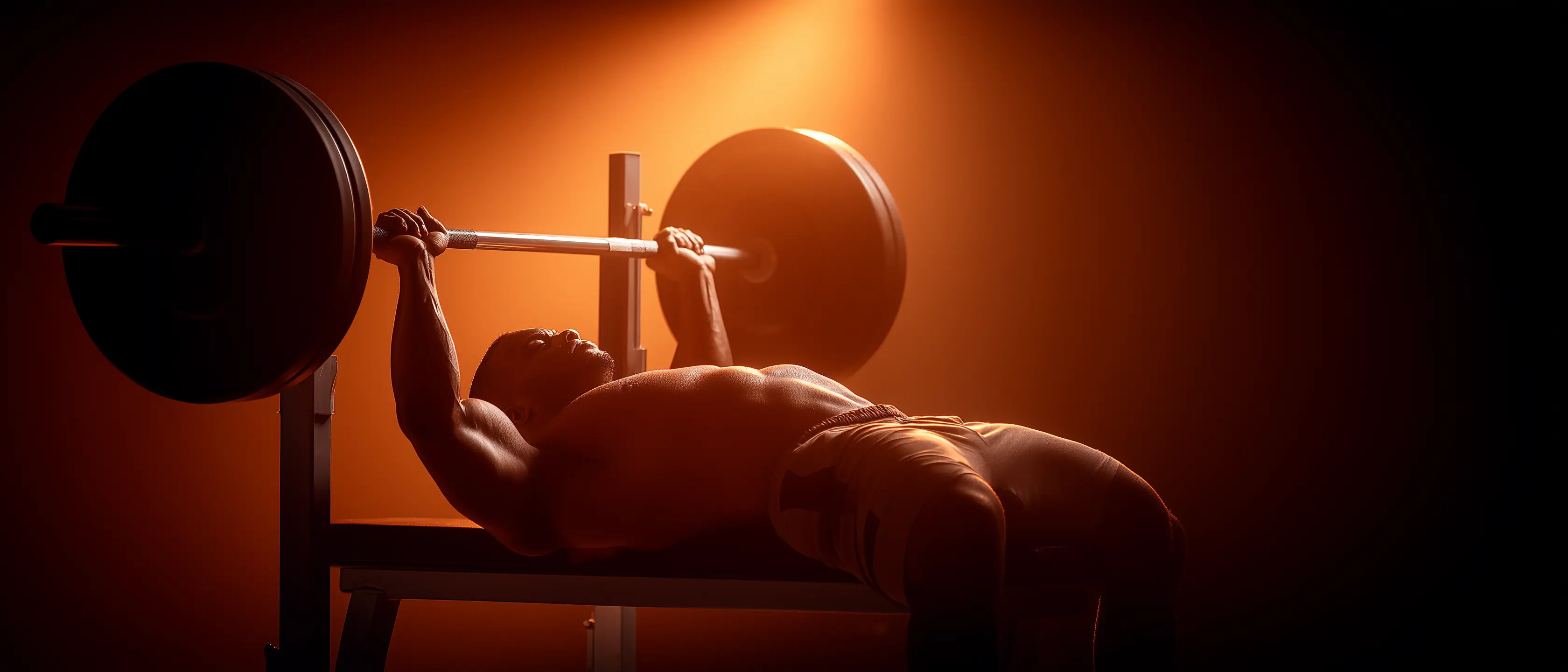
“How much do you bench?” is the universal gym measurement, for better or worse — so it’s the lift everyone wants to fix first. On 5x5 you’ll bench every “A” workout, roughly 1.5 times per week, and steady gains of 2.5kg per session add up fast.
Below is how to bench with proper form, a dedicated shoulder-safe setup section (the bench is where most lifters first feel shoulder pain), and the seven mistakes that hold people back. For technique tips on all five lifts, see our exercise guide.
The Setup Matters Most
Your bench press is made or broken before you even touch the bar. A sloppy setup means inconsistent reps and increased injury risk.
Step 1: Position on the Bench
Lie down with your eyes directly under the bar. Not your chin, not your forehead — your eyes. This gives you the right distance for a straight unrack.
Step 2: Plant Your Feet
Feet flat on the floor, pulled back toward your hips as far as possible while keeping them flat. This creates leg drive — your legs push through the floor, creating full-body tension.
Some people bench on their toes. Others use a wider stance. Both work. What matters is that your feet create a stable base you can push against.
Step 3: Arch Your Back
Create a slight arch in your lower back. Your upper back and butt stay on the bench, but your lower back has a gap.
This arch:
- Shortens the range of motion slightly
- Creates a more favorable pressing angle
- Protects your shoulders by keeping them in a safer position
A flat back bench press puts your shoulders in a compromised position. Some arch is safer than none.
Step 4: Retract Your Shoulder Blades
This is the most important setup cue. Squeeze your shoulder blades together and down, like you’re trying to put them in your back pockets.
Retracted scapulae:
- Create a stable shelf to press from
- Protect your rotator cuff
- Increase your leverage
Press your upper back hard into the bench. You should feel almost stuck to it. If you lose this position during the lift, re-rack and reset.
Step 5: Grip the Bar
Grip width varies by person. A good starting point: when the bar is at your chest, your forearms should be roughly vertical.
- Too narrow: triceps take over, longer range of motion
- Too wide: shoulder stress increases, reduced power
- Just right: comfortable, forearms vertical at the bottom
Grip the bar hard. A tight grip activates more of your upper body through neurological irradiation. Don’t hold it loosely.
Bar position in your palm: across the base of your fingers is weaker but feels natural. Deeper in your palm (over the heel) is stronger but can stress wrists. Aim for the middle.
Shoulder-Safe Setup
The bench press is where most lifters first meet shoulder pain, and it’s almost never the bar’s fault — it’s the position the shoulder is in when the bar comes down. Three setup choices decide whether pressing crowds the front of your shoulder or spares it. They’re worth understanding together, not just as isolated cues.
The front of the shoulder is vulnerable because the rotator cuff tendons run through a narrow gap between the head of your upper-arm bone and the bony arch of the shoulder blade above it. When that gap closes under load, the tendon gets pinched and irritated — the mechanism behind shoulder impingement, which over time can progress to tendinitis. Good bench setup is, at its core, a way of keeping that gap open while you press.
1. Retract and depress the scapulae
Pinning your shoulder blades back and down (not just squeezing them together) rotates the shoulders into a stable, externally-rotated position and pulls the head of the upper-arm bone away from that bony arch — opening the space the tendons pass through. Pressing with loose, forward-rolled (protracted) shoulders does the opposite: it narrows the gap right when the load is heaviest. This is why the retraction cue from Step 4 isn’t just about leverage — it’s your single biggest lever for anterior shoulder safety.
2. Pick a grip width that keeps forearms vertical
Grip width sets the angle of your upper arm relative to your torso, which in turn sets how much the front of the shoulder is stressed. The wider you grip, the more your upper arms travel out toward 90 degrees, and the more the shoulder is forced into the pinched position above. A grip that puts your forearms roughly vertical at the bottom keeps the upper arm at a friendlier angle. If your current grip flares your elbows wide, narrowing it is one of the fastest pain fixes — and if you want to go further, a close-grip bench press keeps the elbows tucked tightest of all.
3. Tuck the elbows to 45-75 degrees
The grip sets the bar’s width; the elbow tuck controls the arc on the way down. Lowering with elbows flared to 90 degrees drives the upper-arm bone forward into the front of the shoulder under maximal load. Tucking to roughly 45-75 degrees keeps the upper arm in a position where the cuff tendons have room to glide. You don’t need to pin your elbows to your ribs — that kills chest involvement — but anything wider than ~75 degrees trades shoulder health for nothing useful.
Put together, these three turn the bench from a shoulder-aggravating lift into one most lifters can press on for decades. If you already have pain that lingers between sessions, work through the dedicated guide on bench press shoulder pain before adding weight.
The Lift
Unrack
With arms locked, push the bar straight up to clear the J-hooks, then bring it forward until it’s directly over your shoulder joint.
Don’t pull the bar out in an arc. Lift straight up, then straight forward. Unracking in an arc forces you to stabilize a moving weight while you find your position.
Descent
Lower the bar to your lower chest / upper abdomen. Not to your clavicle, not to your belly button — roughly where your nipple line is or slightly below.
Lower in a slight diagonal from your shoulders toward this point. The bar moves down and back toward your face.
Elbow position: tucked at about 45 degrees from your body. Not flared at 90 degrees (shoulder stress), not completely tucked at 20 degrees (loses chest emphasis). 45-75 degrees is the safe zone.
Control the descent. Don’t drop the bar or bounce it off your chest. A 2-3 second descent is fine. Touch your chest — every rep.
Touch
The bar should touch your chest lightly, not slam into it. A brief pause at the bottom is fine. Bouncing the bar off your sternum is cheating yourself and risks injury.
Press
Drive the bar up and slightly back toward your face. The bar path isn’t straight up — it’s a slight arc ending over your shoulders.
Think “push yourself away from the bar” rather than “push the bar away from you.” This cue helps maintain your arch and leg drive.
Lock out completely at the top. Arms fully extended, bar over your shoulder joint. That’s one rep.
The 7 Mistakes
Mistake 1: Flat Back / No Arch
Benching with your back completely flat on the bench puts your shoulders in a vulnerable position. The rotator cuff has to work harder to stabilize, increasing injury risk.
The fix: Create a moderate arch. Upper back pinned to bench, slight gap under lower back, butt on bench. You don’t need a powerlifting-level arch — just enough to protect your shoulders.
Mistake 2: Loose Shoulder Blades
If your shoulder blades aren’t pinned back and down, you lose your stable base. The bar will wobble, your shoulders will take more stress, and you’ll press less weight.
The fix: Squeeze your shoulder blades together before you unrack. Maintain that squeeze throughout the entire set. If you lose it, re-rack and reset.
Mistake 3: Elbow Flare
Pressing with elbows at 90 degrees (perpendicular to your body) puts massive stress on your shoulders. This is how people tear their rotator cuff benching.
The fix: Tuck your elbows to 45-75 degrees. Your elbows should point somewhere between straight out and straight down. As the weight gets heavier, you might naturally flare slightly — that’s okay. Full 90-degree flare is not.
Mistake 4: Not Touching Chest
Stopping an inch above your chest robs you of chest development. The bottom portion of the lift is where your pecs work hardest. Cutting it short means cutting your gains short.
The fix: Touch your chest on every single rep. If you can’t touch with a given weight, the weight is too heavy. Reduce and work back up with proper range of motion.
Mistake 5: Bouncing
Bouncing the bar off your chest is cheating. Worse, it’s dangerous — you’re slamming a heavy object into your ribcage.
The fix: Touch and press. The bar should touch your chest gently, pause for a split second, then press. No bounce, no slam.
Mistake 6: Butt Lifting
When the weight gets hard, people lift their butt off the bench to create more arch and reduce range of motion. This turns the lift into something between a bench press and a decline press.
The fix: Keep your butt on the bench throughout the lift. If your butt lifts on the last rep of a hard set, it happens — but if it’s lifting on every rep, the weight is too heavy.
Mistake 7: No Leg Drive
Your legs aren’t just resting on the floor. They’re actively pushing, creating tension that transfers through your body into the bar.
The fix: Before you unrack, push your feet into the floor. Feel your quads and glutes engage. Maintain that pressure throughout the set. Your whole body should feel tight.
Warming Up
Same principle as all lifts: don’t jump straight to your working weight.
Example for 60kg work sets:
- Empty bar (20kg) × 10 reps
- 40kg × 5 reps
- 50kg × 3 reps
- 60kg × 5×5 (work sets)
The warm-up sets practice the movement and prepare your joints. They’re not exhausting you before the real work.
Progression
Add 2.5kg every successful Workout A. Bench progress is slower than squats because:
- You bench less frequently (every other workout vs. every workout)
- Upper body lifts progress slower than lower body lifts generally
- The weights involved are smaller
Expect your bench to eventually stall before your squat. When it does, follow the standard protocol: try the same weight again, and deload after three failures.
Safety: The Roll of Shame
If you bench alone, you need to know how to bail safely.
When you fail and the bar is stuck on your chest:
- Don’t panic
- Slowly roll the bar toward your hips
- Once it’s past your ribcage, sit up
- Drop the bar off your lap
It’s embarrassing but not dangerous if you stay calm. Practice it with an empty bar so you know the movement if you ever need it.
Better options: bench in a power rack with safeties set just above your chest, or use a spotter. But if neither is available, the roll of shame works.
When Form Breaks Down
Your last rep of a heavy set won’t look as clean as your first rep at a light weight. Some form breakdown is acceptable:
Acceptable:
- Slight additional elbow flare
- Slower bar speed
- Bar path drifting slightly
Not acceptable:
- Extreme elbow flare (90 degrees)
- Butt completely off the bench
- Not touching chest
- Shoulder blades completely loose
If you see unacceptable breakdown patterns, the weight is too heavy. Deload and rebuild.
Build Your Bench
The bench press responds to consistency. Show up every Workout A, add your 2.5kg when you earn it, and film yourself periodically to catch form drift.
Six months from now, you’ll be pressing weights that seem impossible today. It just takes time. For detailed form guides on every 5x5 lift, check the full exercise guide.
Track your bench press progress automatically:
Track your 5x5 progress automatically
Built-in plate calculator, rest timer, and auto-progression. Free for iOS & Android.
Frequently asked questions
Should the bar touch my chest?
Yes, always. A full rep means the bar touches your chest and your arms lock out completely at the top. Stopping an inch above your chest robs you of chest development and teaches poor motor patterns.
How wide should my grip be?
Start with hands about 1.5x shoulder width — roughly where your forearms are vertical when the bar touches your chest. Narrower grips emphasize triceps, wider grips emphasize chest. Find what's comfortable.
Is arching your back cheating?
No. A moderate arch protects your shoulders and creates a more efficient pressing angle. Excessive arches (like competitive powerlifters use) are a technique choice, not a requirement. Some arch is safer than a completely flat back.
Why does my shoulder hurt when I bench?
Usually one of two issues: flaring elbows to 90 degrees (puts rotator cuff at risk), or pressing with protracted shoulder blades (loses stability). Fix your setup and the pain typically resolves.
How does retracting my shoulder blades protect my shoulders?
Pinning your scapulae back and down sets your shoulders into external rotation and pulls the head of the upper-arm bone away from the bony arch above it. That widens the space the rotator cuff tendons pass through, so heavy pressing is less likely to pinch them. Pressing with loose, forward-rolled shoulders narrows that space and is a common driver of front-of-shoulder pain.
Is the bench press or the overhead press harder on the shoulders?
It depends on setup, not the lift itself. A flat bench with flared elbows and rounded shoulders is one of the most shoulder-aggravating positions in the gym. A well-set-up bench — retracted scapulae, elbows tucked to 45-75 degrees — is far gentler. If pressing overhead is comfortable but benching hurts, your bench setup is almost always the culprit. See our comparison of the two lifts for the full breakdown.
Writes the Lift5x5 training blog. Over a decade under the bar running 5x5-style programs — practical strength advice with no BS, just barbells.
More about Erik →