Ego lifting: why lifting too heavy hurts progress
Loading more weight than you can handle with proper form slows progress and invites injury. How to recognize ego lifting and fix it.
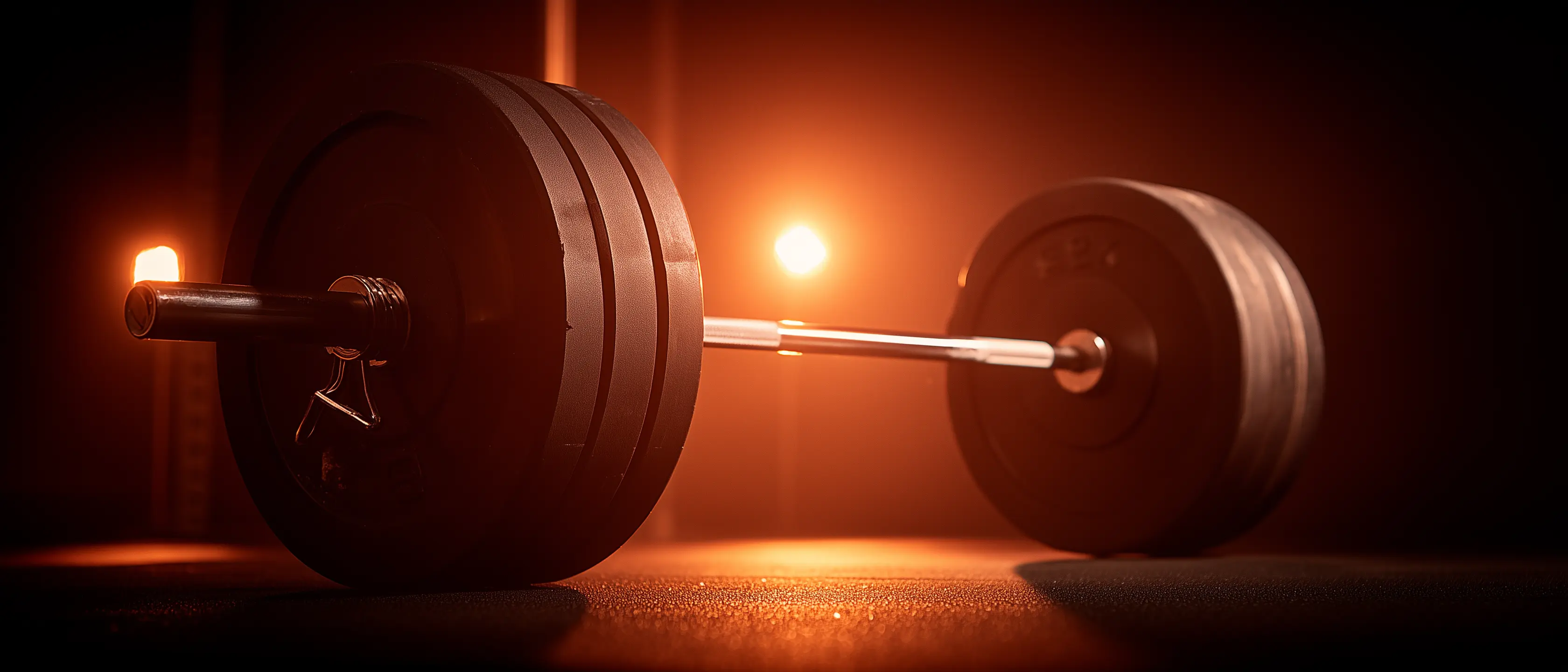
The bar is loaded with more than you should be lifting. You know it’s too heavy. Your warm-up sets told you as much. But someone is squatting in the rack next to you, and their bar has more plates than yours.
So you unrack the weight, descend two-thirds of the way down, grind out five ugly reps with a rounded back, and rack it feeling like you accomplished something. Developing the right training mindset starts with understanding why this instinct hurts you.
You didn’t. You just made yourself weaker, reinforced bad movement patterns, and took one step closer to an injury that could sideline you for months.
What ego lifting actually is
Ego lifting is loading more weight than you can handle with proper form, driven by something other than your program. That something is usually social pressure, comparison, impatience, or a misunderstanding of what makes you stronger.
It’s not the same as grinding through a hard rep. The last rep of a challenging set of five might be slow, might feel ugly, might not be textbook perfect. That’s fine - that’s pushing your limits productively.
Ego lifting is different. It’s form breakdown from rep one. It’s choosing weight based on who’s watching, what the person next to you is lifting, or what you think you “should” be capable of rather than what your body and your program are telling you.
The many faces of ego lifting
It doesn’t always look like the guy bouncing 150kg off his chest. Sometimes it’s subtle:
- Quarter squats because full depth with that weight is impossible
- Bench press that never touches the chest
- Deadlifts with a rounded lower back from the first rep
- Barbell rows that look more like a standing hip thrust
- Overhead press with excessive back lean, turning it into an incline press
In each case, the lifter is using more weight than they can handle through a full, controlled range of motion. The weight goes up, technically, but the target muscles aren’t doing the work they should be.
Why ego lifting slows your progress
This is the part that might surprise you. Ego lifting doesn’t just risk injury - it actively makes you weaker and less developed than lifting properly would.
You’re not training full range of motion
A 2020 meta-analysis published in the Journal of Strength and Conditioning Research found that full range of motion training produced greater strength gains and muscle hypertrophy compared to partial range of motion, even when the partial ROM group used heavier loads.
Read that again. Lighter weight through full range of motion built more strength than heavier weight through half the range. The quarter squatter loading an extra 40kg isn’t getting ahead - they’re falling behind the person doing full-depth squats with less weight.
Your muscles adapt to the range they’re trained in. If you only squat to parallel with 120kg, you’ll be strong at parallel. But you won’t have strength or stability in the bottom position, which is exactly where injuries happen in real life.
You’re reinforcing bad movement patterns
Your nervous system is always learning. Every rep is practice. If you do 25 reps of squats with a forward lean and knee cave because the weight is too heavy, you’ve just done 25 reps of practicing bad form.
Motor patterns become ingrained through repetition. The more you practice a movement incorrectly, the harder it becomes to correct later. You’re not just stalling your progress - you’re actively building patterns that will limit you.
Compare this to 25 reps at a manageable weight with proper bracing, controlled descent, knees tracking over toes, and a solid drive out of the hole. Same number of reps. One builds a foundation for decades of strength. The other builds a ticking clock toward injury.
You’re increasing injury risk dramatically
Form breakdown under load is the single highest risk factor for acute training injuries. A 2016 study in the Orthopaedic Journal of Sports Medicine found that improper technique was the primary cause of weightlifting injuries, with excessive load being the most common reason for technique failure.
The math is straightforward. If ego lifting causes an injury that sidelines you for eight weeks, you lose eight weeks of training. Eight weeks of potential progress. If you’d just lifted the weight your program prescribed, you’d be eight weeks stronger.
The fastest way to get weaker is to get hurt. The fastest way to get hurt is to lift more than you can control.
You’re building confidence in the wrong thing
Ego lifting builds confidence in a number, not in your ability. You “squatted” 140kg, but you did it with half the range of motion and a rounded back. That number means nothing because the quality of the rep means nothing.
Real confidence comes from knowing you can handle a weight properly. Full depth, controlled descent, solid drive. When you squat 100kg with textbook form, that’s 100kg of real, usable, transferable strength. That’s confidence that doesn’t crumble under scrutiny.
Why people ego lift
Understanding the motivation helps you catch yourself doing it.
Social comparison
This is the most common driver. Someone near you is lifting more, and something in your brain says you should be able to match them. This instinct is deeply human but completely irrational in a gym setting.
That person might have five more years of training experience. They might outweigh you by 30kg. They might have leverages that favor that particular lift. They might also be ego lifting themselves - you could be comparing your honest effort to someone else’s inflated numbers.
The only comparison that matters is you versus your logbook from last week. If that number went up by 2.5kg, you’re winning.
Impatience
Adding 2.5kg per session doesn’t feel fast. You want to be squatting 100kg, and you’re stuck at 67.5kg, and it feels like that gap will never close.
But let’s do the math. At 2.5kg per session, three sessions per week, that’s 7.5kg per week. In four weeks, you’ve added 30kg. In 12 weeks, 90kg. The empty bar to a respectable squat happens faster than you think - if you don’t get hurt jumping ahead.
The person who adds 2.5kg every session for six months will always be stronger than the person who tries to add 20kg in one jump and spends three weeks nursing a back injury.
Misunderstanding what builds strength
Many people believe that heavier always means more effective. It doesn’t. Your muscles don’t know what number is printed on the plates. They respond to mechanical tension through a range of motion over time.
A controlled, full-depth squat at 80kg creates more mechanical tension in your quads, glutes, and adductors than a quarter squat at 120kg, because the muscles work through a longer range and spend more time under load.
Form IS strength. Proper form means the right muscles are doing the right work through the right range. Take form away, and you’re just balancing weight inefficiently.
How to fix ego lifting
Film yourself
This is the single most effective intervention. Set your phone up to record your working sets from the side. Watch it back between sets.
The camera doesn’t lie, and it doesn’t have an ego. You might feel like your squat was deep enough. The video will tell you the truth. You might think your back was straight on deadlifts. The video will show you the rounding you couldn’t feel.
Most people who start filming their lifts are humbled the first time they watch the footage. That humility is the beginning of real progress.
Follow the program
A structured program like 5x5 tells you exactly what weight to use. You don’t need to decide. You don’t need to negotiate with your ego. The program says 72.5kg, so you lift 72.5kg. If you complete all five sets of five, you add 2.5kg next time. If you don’t, you try again.
This removes the emotional component of loading decisions entirely. The weight is prescribed. Your job is to execute it with the best form possible.
Remember that nobody cares what you lift
This is simultaneously the most liberating and least believed piece of advice in fitness.
Nobody in the gym is tracking your numbers. They’re not watching you. They’re between sets, resting, checking their phone, thinking about their own workout, planning dinner, worrying about their own form. You’re a background character in their gym session, just as they are in yours.
The few people who do notice other lifters? Experienced trainees who appreciate good form regardless of the weight on the bar. A beginner squatting the empty bar with perfect depth and controlled tempo earns more respect from serious lifters than someone quarter-squatting three plates.
Compete with yesterday
Open your training log. Look at what you lifted a month ago. Look at what you lifted three months ago. That’s your competition.
If your squat was 40kg three months ago and it’s 65kg today, that’s 62.5% stronger in 12 weeks. That’s remarkable progress that has nothing to do with what anyone else is doing.
Keep a log, track every session, and draw your motivation from your own trajectory. The numbers in your logbook are the only ones that matter.
The strongest people in the gym have the best form
Walk into any serious strength gym and watch the people moving the most weight. Not the guys doing half-reps for Instagram - the people actually putting up big numbers in competition or in consistent training.
Their form is almost always impeccable. Controlled descents, full range of motion, precise technique under enormous loads. They didn’t get strong by ego lifting. They got strong by doing thousands of reps with proper form, adding small amounts of weight over years.
Strength is a skill. Like any skill, it requires quality practice. Every rep is a repetition of a movement pattern, and the quality of that pattern determines the quality of the strength you build.
The long game always wins
Consider two lifters starting the same day, same program, same starting weights.
Lifter A ego lifts. They skip ahead in weight, do half reps, get a minor back injury at month three, take four weeks off, restart, push too hard again, strain a shoulder at month seven, take three weeks off. Over 12 months, they’ve trained maybe 30 weeks out of 52, with inconsistent loading and form that never truly improved.
Lifter B follows the program. They add 2.5kg per session, film their form, accept that some sessions feel slow, and never miss time to injury. Over 12 months, they’ve trained 50 weeks out of 52 with consistent, progressive loading and form that improved with every session.
Lifter B is dramatically stronger. Not because they have better genetics or a better program. Because they had the patience to do it right, and patience meant they never had to restart.
The bar doesn’t care about your ego. It only cares about what your body can actually do. Train what’s real, progress what’s honest, and explore the complete mindset guide for more on building a sustainable approach. The strength will come.
Track your 5x5 progress automatically
Built-in plate calculator, rest timer, and auto-progression. Free for iOS & Android.
Helping lifters get stronger with the simplest program that works. No BS, just barbells.